Paysage; soleil et neige — History & Facts
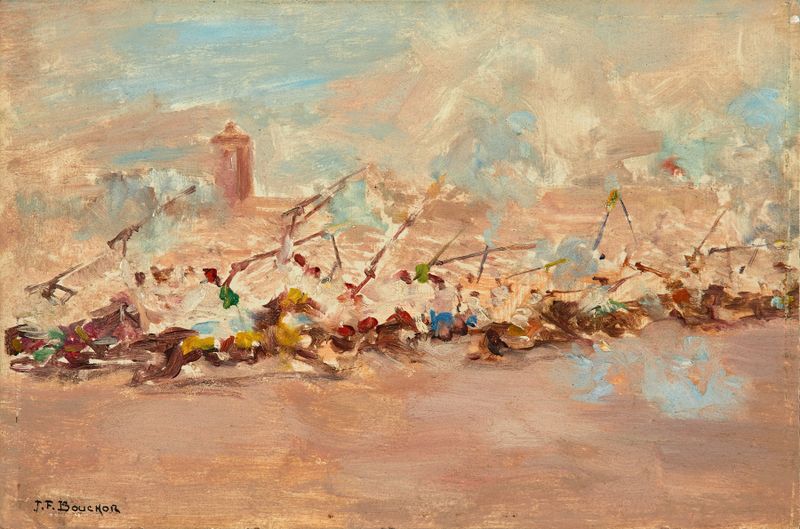
This reflection resonates deeply in a world where time slips through our fingers, often unnoticed, yet profoundly felt. In the stillness of a winter landscape, we encounter a moment that invites both admiration and introspection. Look to the foreground, where a gentle blanket of snow envelops the land, glistening under a pale, golden sun. The artist's deft brushstrokes create a textured landscape that seems to breathe, with wisps of cold air visualized in the soft, muted colors of white and pale blue.
Notice how the sunlight bathes the horizon, contrasting sharply with the coolness of the snow, evoking a serene tension between warmth and chill—a fleeting glimpse of peace amidst winter’s starkness. As you delve deeper into the scene, consider the interplay of light and shadow. The sun casts elongated shadows that dance across the snow, reminding us of time's passage and the inevitable melting of pristine beauty. The sparse trees stand resilient, their branches almost skeletal, yet they hold a whisper of life, suggesting endurance even in adversity.
This duality elicits a complex emotional response, revealing how beauty can often coexist with the bittersweet realities of existence. Created in an indeterminate moment of the late 19th century, Bouchor painted this landscape during a period when artists were re-evaluating their connection to nature amidst the rise of modernity. As an artist based in France, he was influenced by the Impressionist movement, capturing the ephemeral qualities of light and time in his work. This painting embodies that spirit—a testament to the beauty found in quiet moments, where time stands still, allowing us to reflect on both the ephemeral and the eternal.