Pêcheur au pied d’une chute d’eau — History & Facts
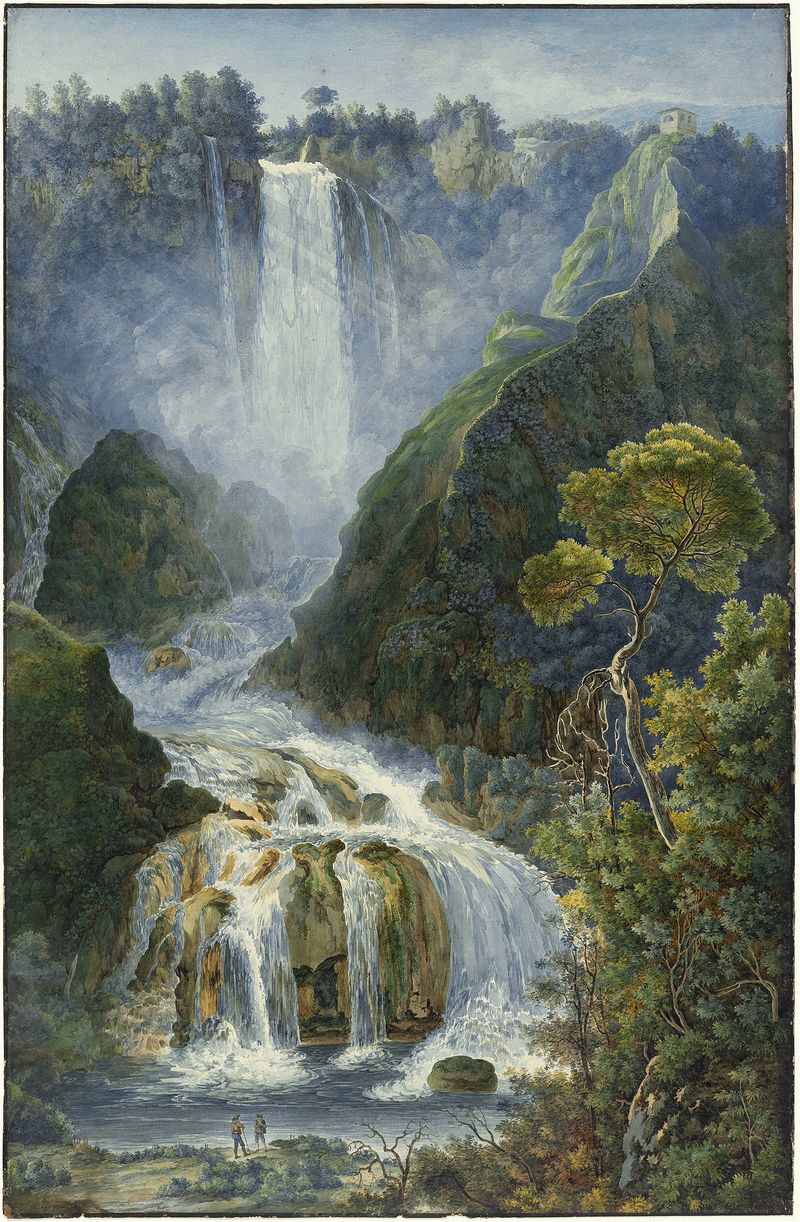
Can beauty exist without sorrow? In the delicate balance of existence, the answer often dwells in the silent spaces between joy and despair. Focus on the serene figure of the fisherman, slightly off-center, who seems both at peace and burdened by the weight of his solitude. The cascading water, rendered with soft strokes of white and blue, draws your eyes upward, creating a sense of movement that contrasts the stillness of the man below. Notice how the light dances on the water’s surface, illuminating the fisherman’s toil while casting shadows that remind us of the deeper currents of life’s challenges.
The palette is both vibrant and muted, echoing the duality of nature’s beauty and the hardships faced. Beneath the surface, this scene evokes a profound tension between the divine and the earthly—between the majestic waterfall and the solitary figure. The water, a symbol of life and renewal, embodies the struggles inherent in the pursuit of sustenance, while the fisherman’s gaze suggests resignation or perhaps reflection on his existence. This interplay reveals a nuanced dialogue about humanity’s relationship with nature and the often-overlooked sorrows that accompany life’s simplest pleasures. Kaisermann painted this work during a time of artistic exploration in the late 19th century, influenced by the burgeoning movements that sought to capture realism and emotion.
Living in Europe amid a backdrop of rapid industrial change, he gravitated towards the tranquil scenes of rural life, celebrating the beauty of everyday moments while highlighting the subtle hardships of labor. This painting, created in his quest for authenticity, invites viewers to contemplate their own connections to beauty and sorrow.