Peasants in a landscape — History & Facts
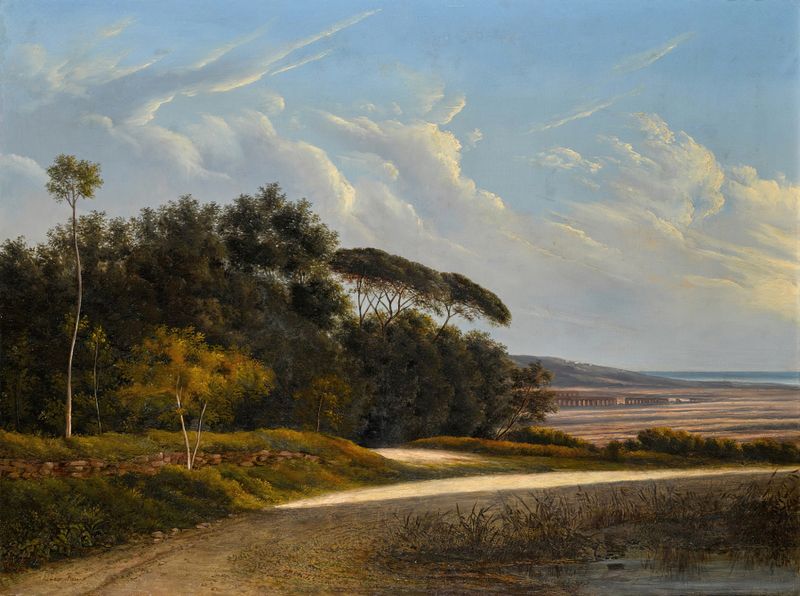
Could a single brushstroke hold eternity? In the vast expanse of the canvas, loneliness seeps through the verdant fields and the figures that occupy them. Look to the left, where the muted greens of the landscape blend seamlessly with the earth-toned attire of the peasants. Notice how the gentle rise and fall of the horizon draws your eye deeper into the scene, creating a sense of distance that mirrors their isolation. The light spills across the canvas, illuminating patches of grass while casting shadows that hint at the weight of their toil.
The composition is simple yet profound, with each figure carefully placed, emphasizing the quietude that envelops them. The emotional tension in this piece lies in the contrast between the vibrancy of nature and the desolation of human existence. The peasants appear engaged in their labor yet surrounded by an overwhelming stillness, suggesting that their connection to the land is both a source of sustenance and solitude. Each character bears a weight that transcends their physical appearance, embodying the timeless struggle between man and nature, hinting at unexpressed hopes and dreams lost in the labor of daily life. Created in the early 18th century, this work belongs to a period when the Roman School was deeply influenced by the Baroque style, emphasizing realism and emotion.
At that time, artists were exploring the relationship between humanity and the landscape, capturing the essence of rural life in a rapidly changing world. The artist, through a meticulous brush, encapsulated a moment in time that speaks to the universal experience of loneliness, resonating with viewers across centuries.