Peasants walking by a stream — History & Facts
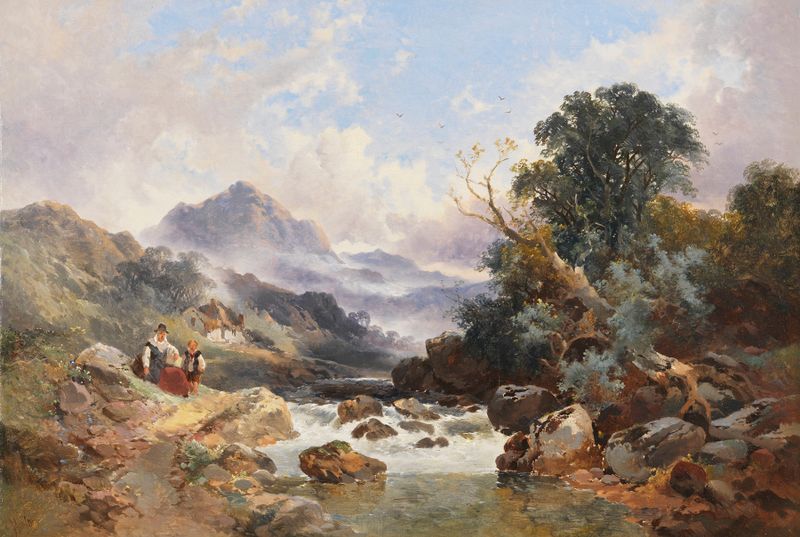
What if beauty was never meant to be finished? In Peasants walking by a stream, the stillness invites contemplation, suggesting the infinite nature of life’s simple moments. Look to the left, where a gentle stream meanders through the landscape, its waters reflecting the dappled sunlight that breaks through the canopy above. The figures of the peasants, rendered in earthy tones, tread softly along the bank, their postures conveying a sense of humble purpose. Notice how the subtle variations of green and gold in the foliage contrast against the muted browns of their clothing, creating a visual harmony that accentuates both the serene setting and the quiet toil of daily life. The emptiness in the composition speaks volumes—a vast, open sky looms above, hinting at the limitations of human existence amid nature’s grandeur.
The peasants seem dwarfed by their surroundings, yet their presence adds a poignant layer of humanity to this tranquil scene. It’s a juxtaposition of labor and leisure, suggesting that even in the mundane, there lies an inherent beauty often overlooked. Joseph Horlor painted this work in 1850, a period marked by industrial transformation and social change. Living in England, he witnessed both the rise of urbanization and the enduring connection to rural life.
Within the art world, Romanticism was giving way to Realism, emphasizing the value of everyday experiences—an ethos that resonates deeply in his portrayal of these simple yet profound moments.