Petit Trianon, Autumn — History & Facts
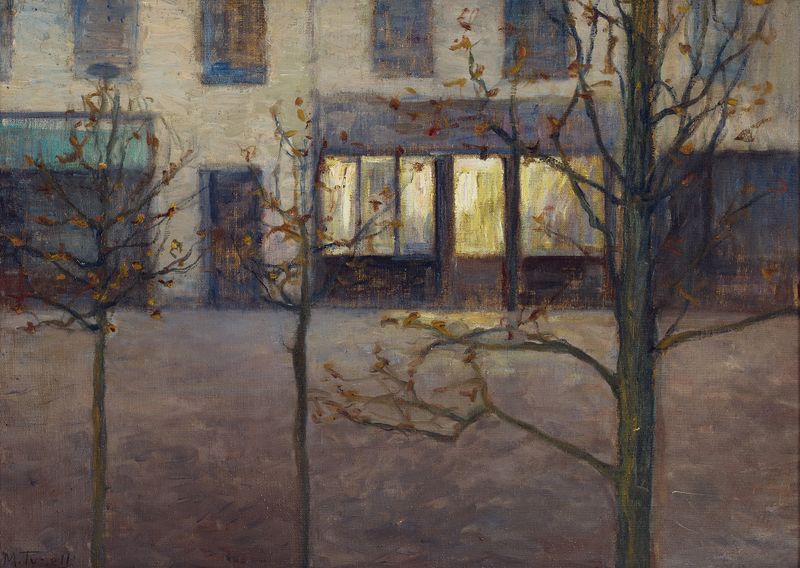
Can beauty exist without sorrow? In the delicate embrace of autumn, the answer lies buried within the golden leaves and whispers of fading light. Look to the right at the intricate details of the foliage that frames the scene, where each brushstroke seems to dance with the vitality of the season. The composition leads your eye towards the Petit Trianon, its elegant architecture a testament to both grandeur and fragility. Notice how the muted colors—rich ochres and soft ambers—evoke a sense of nostalgia, creating a harmonious yet melancholic atmosphere that mirrors the fleeting nature of beauty itself. Amidst the landscape, subtle contrasts emerge; the vibrancy of life is juxtaposed against the inevitability of decay.
The serene setting invites introspection, hinting at the transient joys that haunt memory. Each leaf that falls carries the weight of unspoken dreams, an echo of what once was, as if the very air is thick with the stories of those who sought solace within the walls of this retreat. Märtha Tynell created this piece during a time when the art world was grappling with the shifts of modernity, subtly reflecting a longing for a simpler, more innocent past. As she painted, she navigated her role as a female artist in a predominantly male sphere, drawing upon her own experiences and the rich history surrounding the Petit Trianon.
The absence of a specific date deepens the mystery of this work, allowing viewers to suspend belief and linger in the dreaminess of the autumnal scene.