Pferde an der Tränke — History & Facts
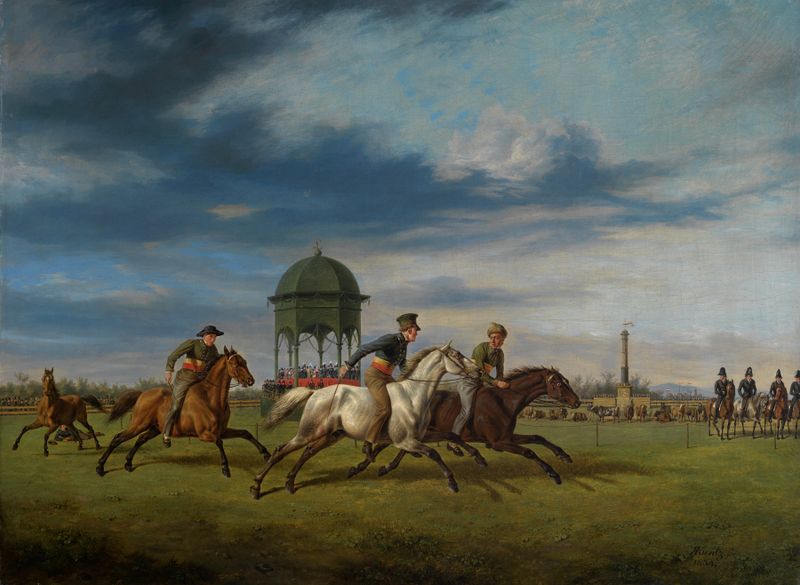
In Pferde an der Tränke, the essence of revolution resonates through the gentle yet profound interaction of nature and tranquility. Look to the left at the serene figures of horses gathered at the watering trough, their glossy coats reflecting a soft shimmer of sunlight that bathes the scene in a warm, golden hue. Notice how Kuntz masterfully employs earthy tones, grounding the horses in the landscape while allowing their grace and fluidity to emerge. The gentle brushstrokes convey a sense of movement, as if the viewer can almost hear the quiet splashes of water and the soft whinnies of the horses, bringing life to the tranquil moment. Delve deeper into the juxtaposition of the horses' peaceful demeanor against the backdrop of societal upheaval occurring in 1830s Europe.
While the world outside may have been tumultuous, the painting captures a moment of solace and unity, hinting at the resilience of life amidst chaos. The repetitive rhythm of the horses drinking together becomes a metaphor for communal strength, a counter-narrative to the revolutionary fervor sweeping through the continent. In 1836, Rudolf Kuntz painted this piece during a period marked by significant social change and artistic evolution. The aftermath of the Revolutions of 1830 inspired artists to reflect on themes of nature, freedom, and the human spirit.
Kuntz's focus on pastoral beauty recalls the Romantic ideals prevalent at the time, as he sought to encapsulate the harmony of life that could exist even in the shadow of unrest.