
Philæ. Nov. 18, 1838 — History & Facts
Can beauty exist without sorrow? In the shadow of ancient ruins, a haunting stillness lingers—an echo of what once was, where madness flirts with majesty. Focus on the intricacy of the foreground, where the sun caresses the weathered stones of the temple. Notice how the artist captures the delicate interplay of light and shadow, illuminating hieroglyphs that whisper stories of a forgotten age. Look closely at the sweeping landscape behind, where the muted palette evokes both the passage of time and the weight of history.
This careful detail invites the viewer to immerse themselves in the emotional depth of the scene. Yet beyond the architectural grandeur lies a tension; the remnants of life clash with the desolation of the present. The stark contrast of sunlight against the deepening twilight suggests the fleeting nature of beauty itself. In the distant horizon, the encroaching dust hints at the madness of an unending cycle—life, decay, and rebirth intertwined.
The serene yet melancholic atmosphere invites contemplation on the fragility of human achievements, poised against the relentless march of time. David Roberts painted this work between 1846 and 1849 after visiting Egypt during his travels in the Middle East. This period was marked by a surge of fascination with ancient cultures and their artworks, as European artists sought new inspiration from exotic lands. Roberts' meticulous observations and romantic sensibilities reflect both his personal journey and the broader artistic movements of his time, encapsulating a world where beauty is often tinged with the shadows of its past.
More Artworks by David Roberts
Browse all →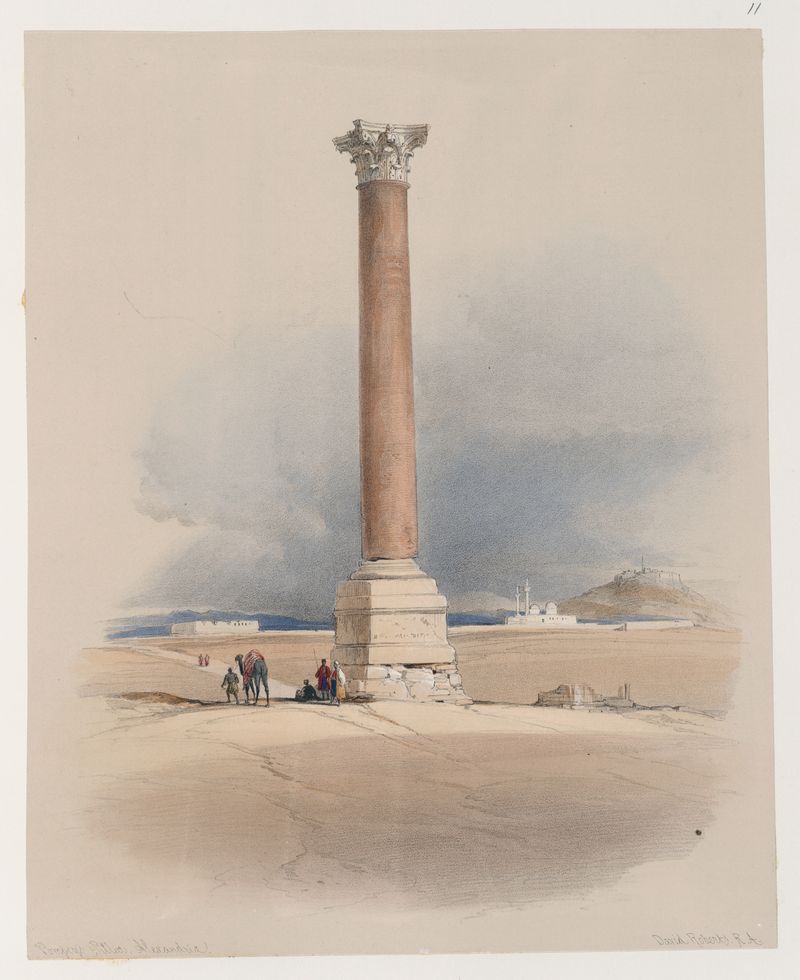
Pompey’s Pillar, Alexandria.
David Roberts

Approach to the Fortress of Ibrim.
David Roberts

Karnac [Karnak]. Nov. 29th, 1838.
David Roberts
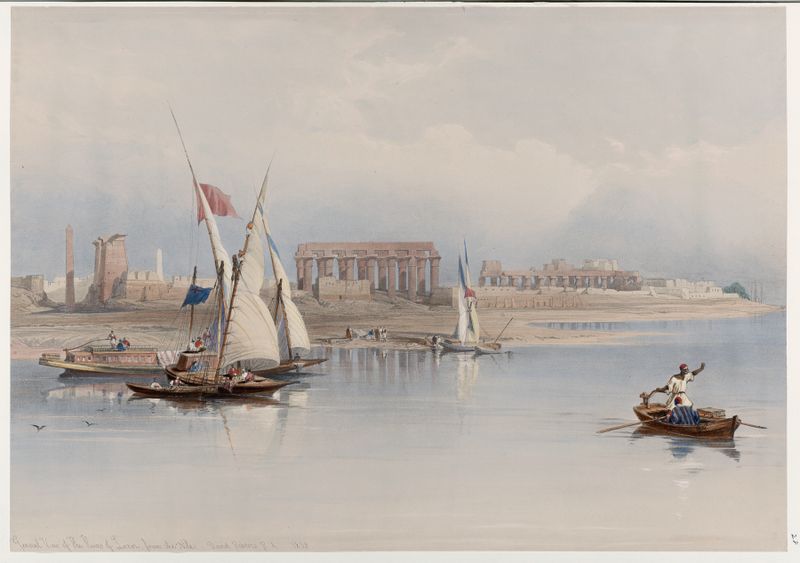
General view of the ruins of Luxor, from the Nile. 1838.
David Roberts

Statues of Memnon at Thebes, during the inundation.
David Roberts

Entrance to the tombs of the kings of Thebes. Bab-el-Malouk [Bîbân al-Mulûk].
David Roberts

The Fortress of the Alhambra, Granada
David Roberts
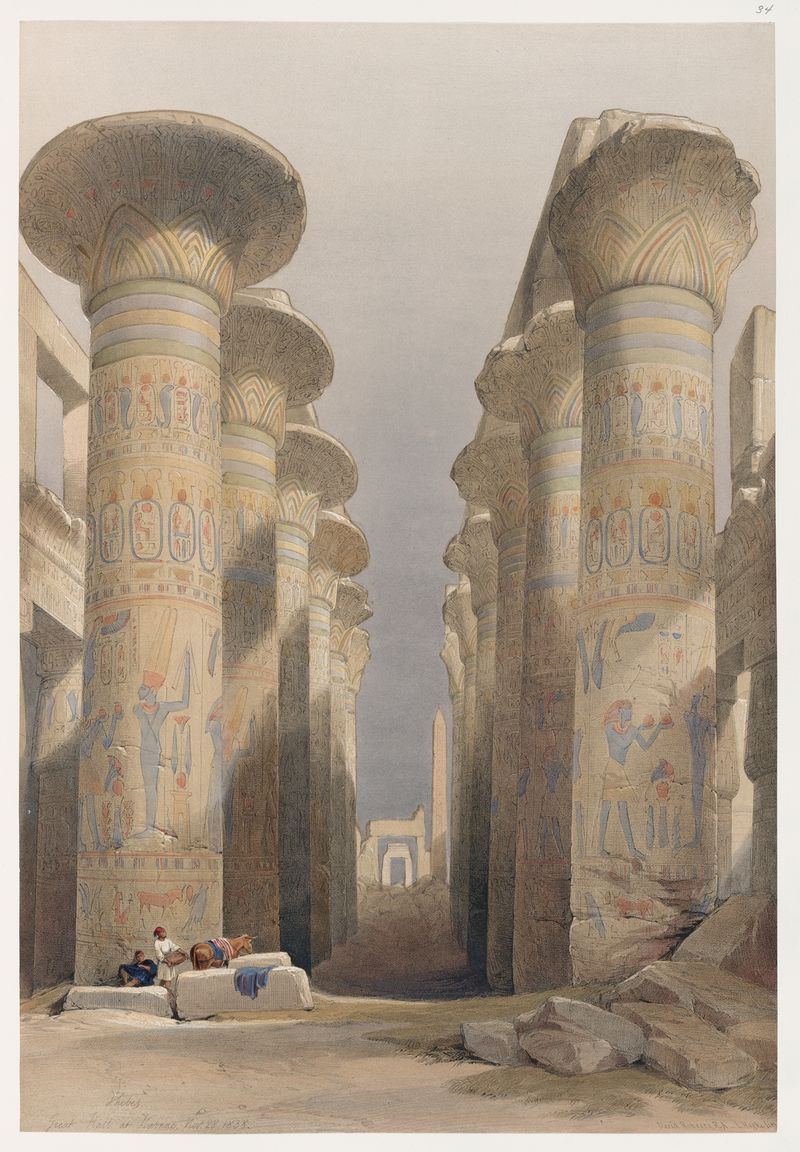
Thebes. Great Hall at Karnak. Nov. 28, 1838.
David Roberts
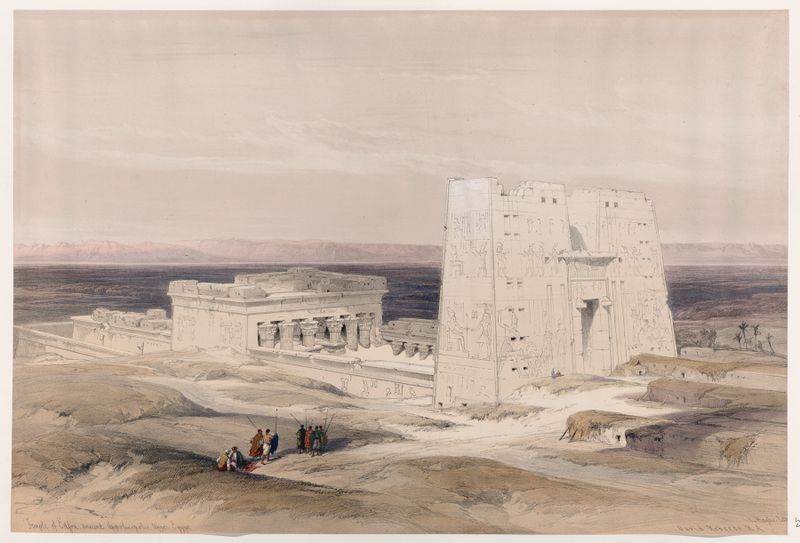
Temple of Edfou [Idfû], ancient Appolinopolis, Upper Egypt.
David Roberts

Temple of Kalabshee [Kalabsha, Kalâbishah], Nubia. Nov. 1838.
David Roberts
More Architecture Art
Browse all →
The statue of Liberty
Frédéric Auguste Bartholdi

View of Houses in Delft, Known as ‘The Little Street’
Johannes Vermeer

View of Houses in Delft, Known as ‘The Little Street’
Johannes Vermeer

The Cathedral in Rouen. The portal, Grey Weather
Claude Monet

The yellow house
Vincent van Gogh

The Church in Auvers-sur-Oise, View from the Chevet
Vincent van Gogh