
Piazetta — History & Facts
Can paint confess what words never could? In Piazetta, beauty unfolds in a quiet yet profound dialogue, inviting the viewer to explore unspoken emotions and layered meanings. Look to the center where a glowing fountain stands, its waters reflecting the soft light of a late afternoon sun. Notice how the surrounding architecture frames the scene, with delicate arches and columns leading the eye toward the intricate details of the fountain's design. The vibrant hues of blues and greens contrast with the warm earth tones of the cobblestones, evoking a sense of harmony and inviting contemplation.
Each stroke captures the texture of the scene, merging realism with an ethereal quality that transcends mere observation. Delve deeper, and you'll find that the interplay of light and shadow creates an emotional tension—the calmness of the water juxtaposed against the bustling life of the piazza. The distant figures seem almost frozen in time, their gestures hinting at stories untold. The fountain, a symbol of both refreshment and isolation, serves as a reminder of our longing for beauty amid the chaos of life.
Grubas captures not just a moment but a feeling—a sense of peace intertwined with an underlying yearning. Created in 1874, Piazetta reflects Marco Grubas's experiences during a transformative period in his career. Living in Venice, he was deeply inspired by the interplay of light and architecture in the city, and this work exemplifies his mastery of capturing fleeting moments. At this time, the art world was shifting, embracing both realism and impressionism, and Grubas navigated these currents, seeking to convey beauty and emotion through his compelling landscapes.
More Artworks by Marco Grubas
Browse all →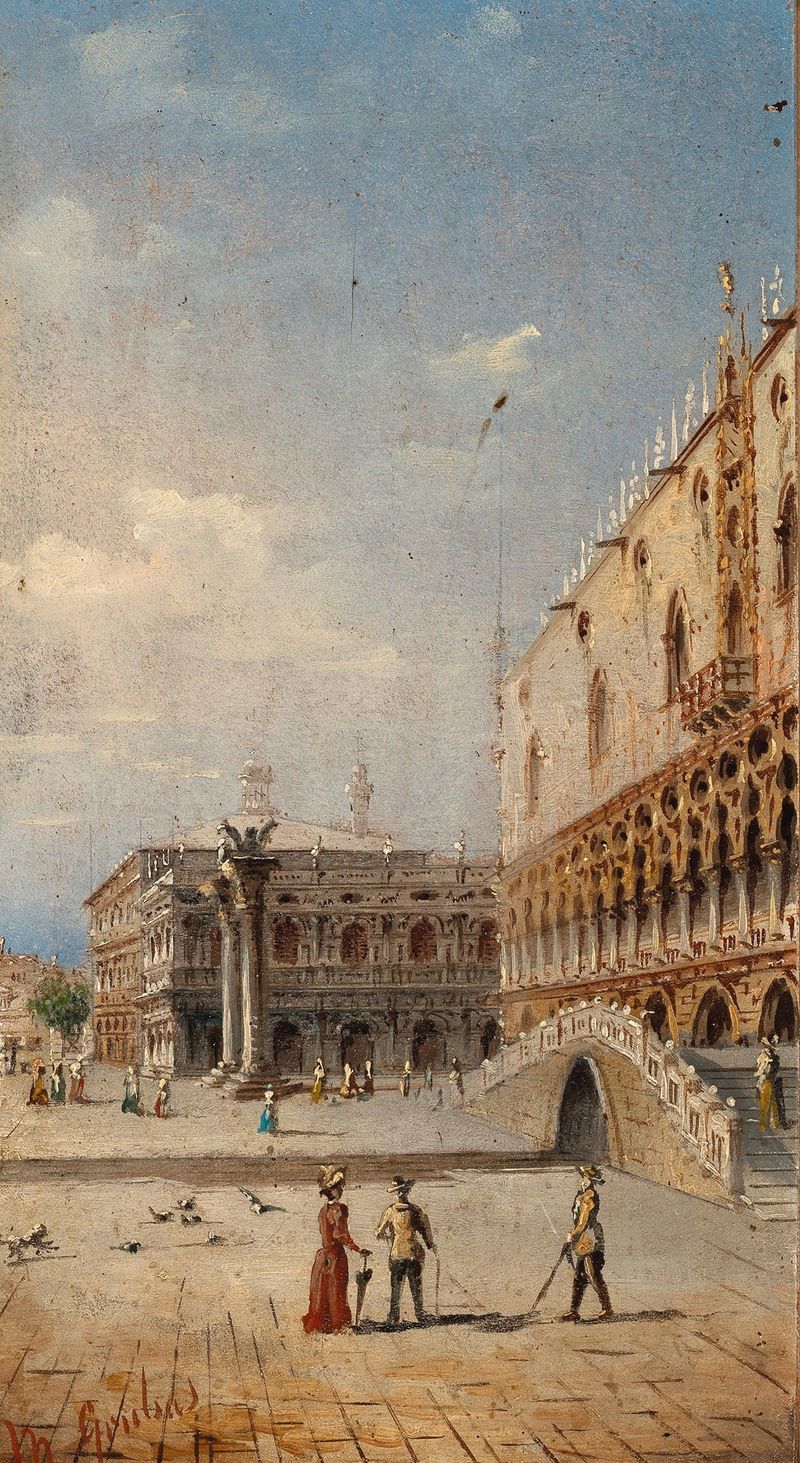
Venice, Piazzetta with St Mark’s Columns
Marco Grubas
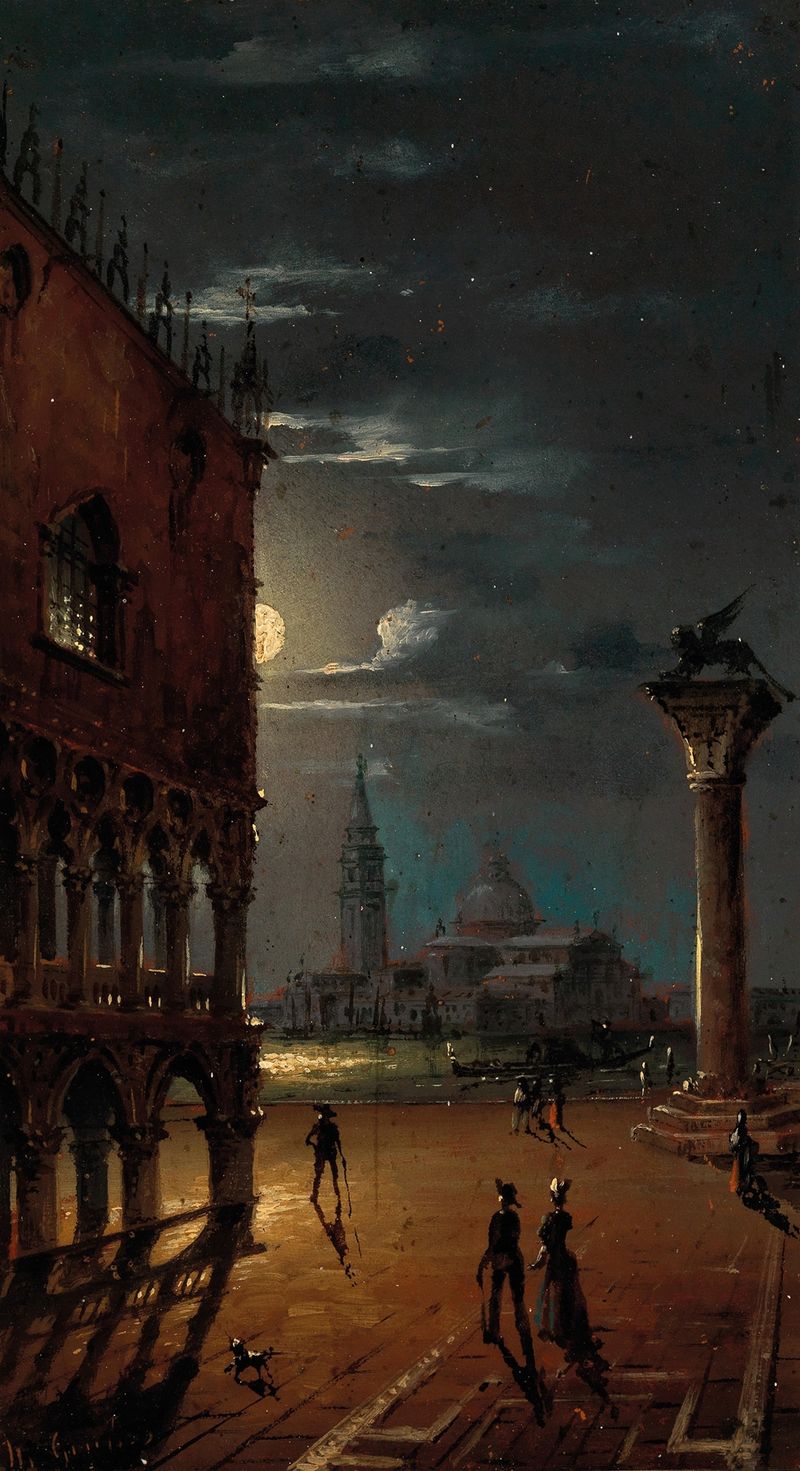
Venice, Moonlit Night with a View of the Palazzo Ducale and San Giorgio Maggiore
Marco Grubas
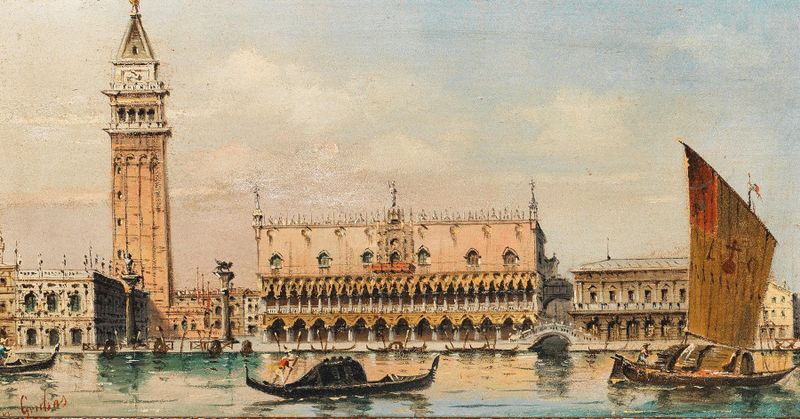
View of St Mark’s Square with Campanile
Marco Grubas
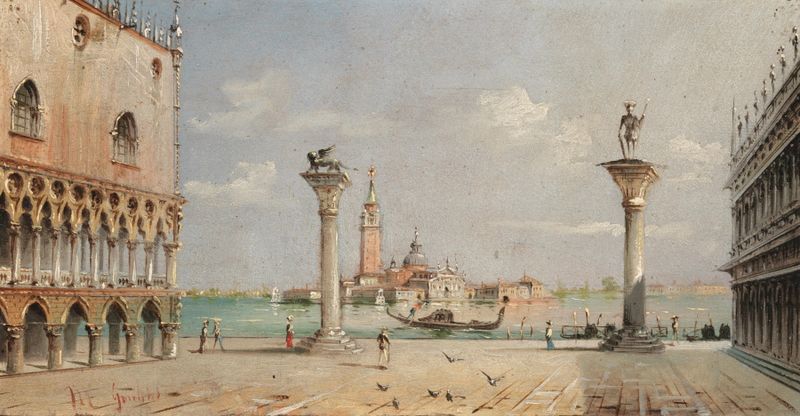
Venezia, Piazzetta San Marco e Isola San Giorgio
Marco Grubas
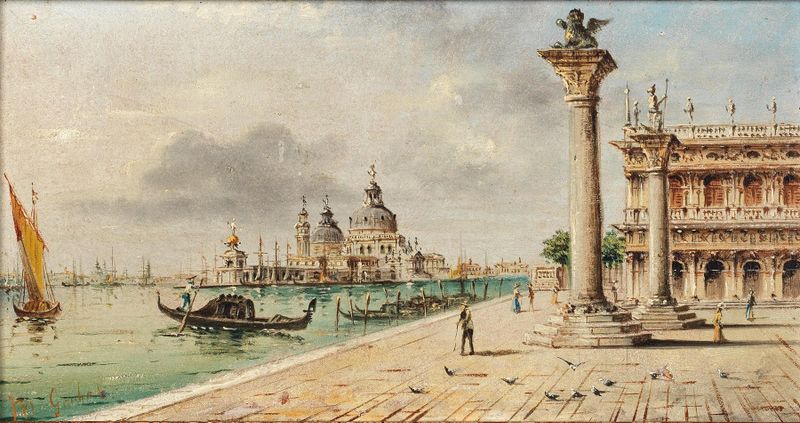
Venice, View of Santa Maria della Salute
Marco Grubas
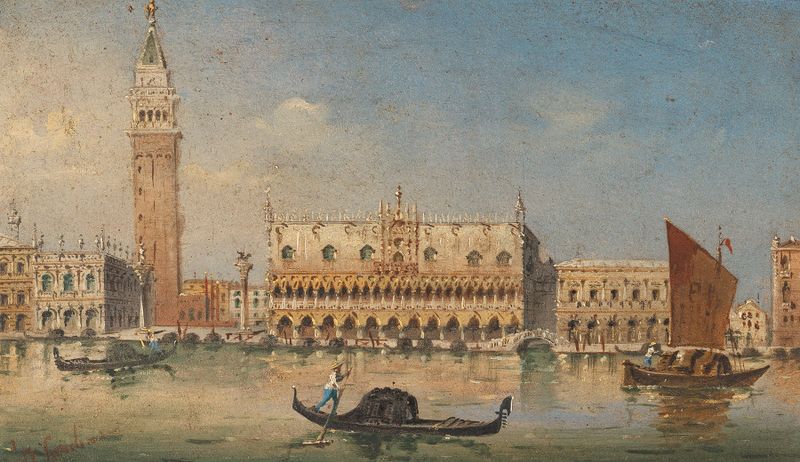
Venice, a View of the Campanile, St Mark’s Columns and the Palazzo Ducale
Marco Grubas
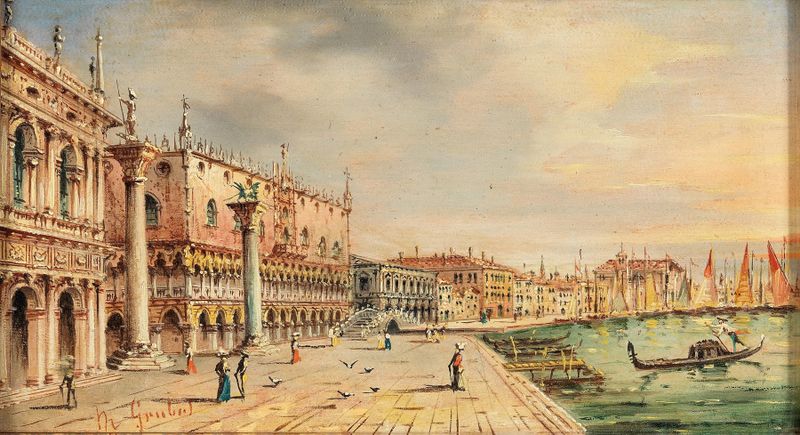
Venice, a view of Riva degli Schiavoni with Palazzo Ducale
Marco Grubas
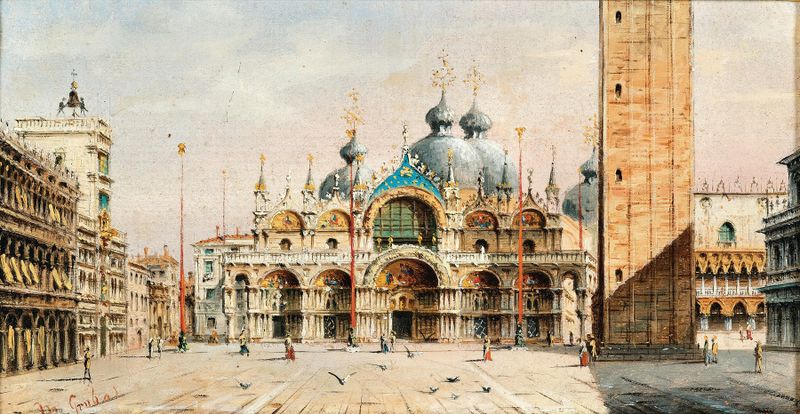
Venice, View of St Mark’s Square
Marco Grubas
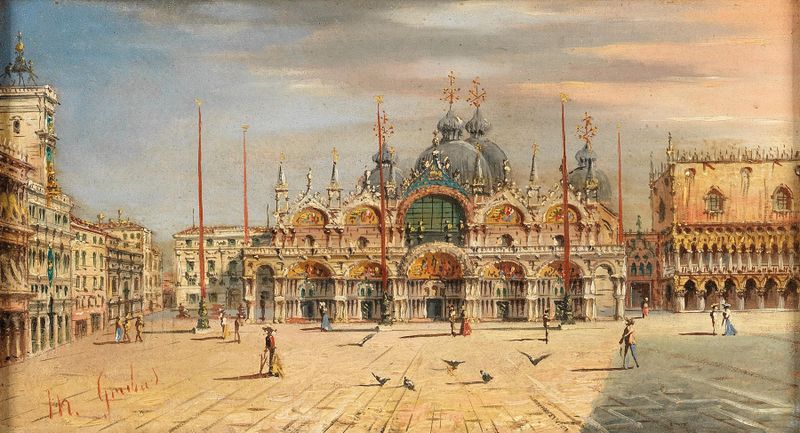
Venice, a view of St Mark’s Square
Marco Grubas
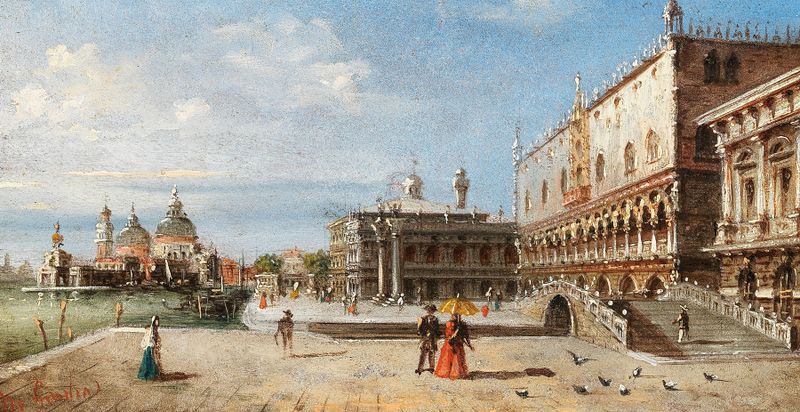
Venice, the Riva degli Schiavoni
Marco Grubas
More Architecture Art
Browse all →
The statue of Liberty
Frédéric Auguste Bartholdi

View of Houses in Delft, Known as ‘The Little Street’
Johannes Vermeer

View of Houses in Delft, Known as ‘The Little Street’
Johannes Vermeer

The Cathedral in Rouen. The portal, Grey Weather
Claude Monet

The yellow house
Vincent van Gogh

The Church in Auvers-sur-Oise, View from the Chevet
Vincent van Gogh