Plantation in Suriname — History & Facts
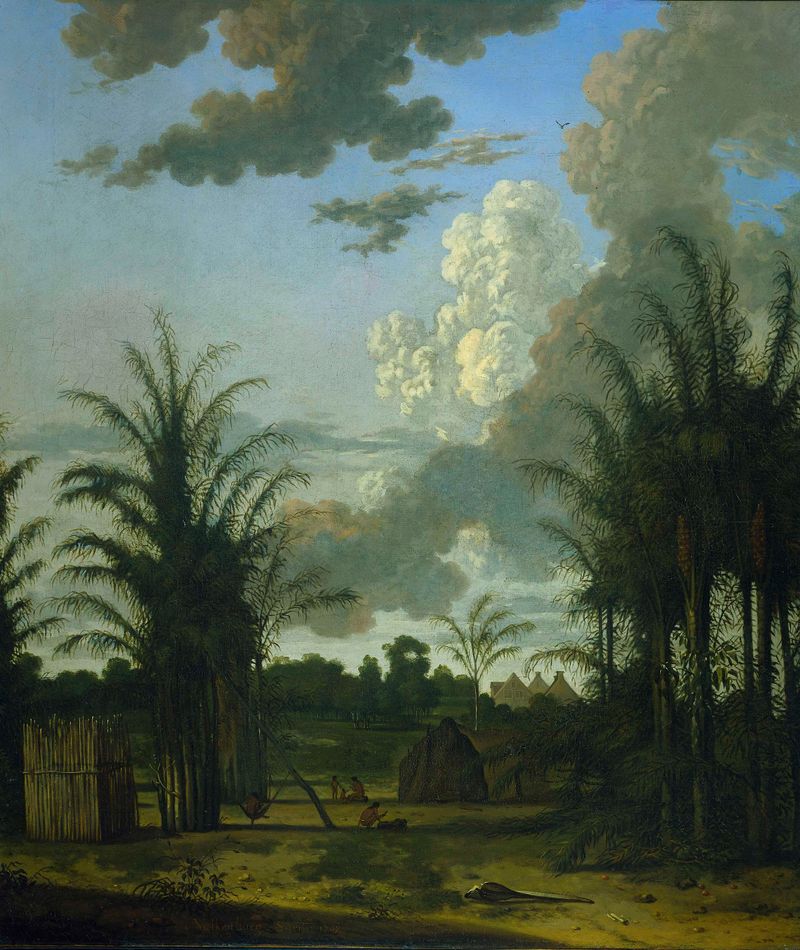
Is this a mirror — or a memory? A canvas that delves into the echoes of a time long past, where the lush green of the landscape intertwines with the dark shadows of history, inviting contemplation on the legacies we inherit. Look closely at the vivid greens on the left, where the treetops burst forth in a symphony of life, contrasting sharply with the muted earth tones that define the plantation. The meticulously rendered buildings emerge through a gentle haze, their stoic presence commanding attention yet hinting at the stories hidden within their walls. Notice how the interplay of light captures the essence of a tropical afternoon, warm and inviting, yet layered with an undercurrent of tension that looms like distant thunder. Beneath the surface, the painting reveals an intricate dance of contradictions.
The pastoral beauty of the landscape stands in stark contrast to the weight of exploitation and labor that it represents. Hidden figures in the fields serve as silent witnesses to a complex narrative, their presence reminding us of the human cost intertwined with the fertile land. This duality invites viewers to grapple with the legacy of colonialism, raising questions about ownership and the stories that history chooses to remember or forget. In 1707, during a period marked by the expansion of European colonialism, Dirk Valkenburg painted Plantation in Suriname amidst the shifting waves of trade and exploitation.
Residing in the Netherlands, he navigated an art world that increasingly sought to document and immortalize the colonial endeavors abroad. The painting stands as a testament to both the beauty of the Caribbean landscape and the darker truths lying beneath its vibrant surface, encapsulating a moment in history that continues to resonate today.