Plowing the field — History & Facts
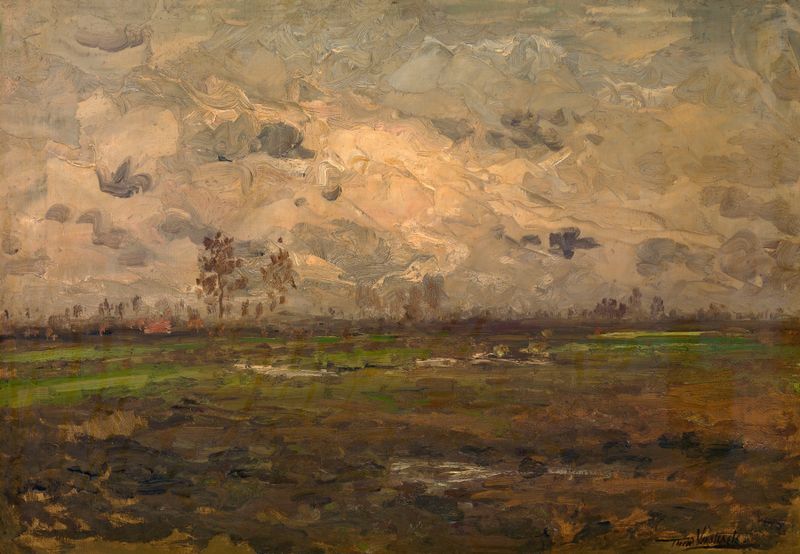
Where does light end, and longing begin? In the quiet expanse of a field, the rhythmic labor of plowing captures the essence of time itself, merging toil and the eternal cycle of nature. Look to the left at the horizon, where a delicate blend of earthy browns and vibrant greens meets a soft sky. Notice how the light gently bathes the plowed soil, revealing the dark, rich earth beneath. The artist’s brushwork evokes the textures of the furrows, while hints of sunlight create a shimmering effect that pulls your gaze toward the solitary figure bent over their work—an embodiment of dedication and perseverance. As you explore the composition, consider the contrast between the vastness of the landscape and the intimate act of plowing.
The figure, though small in the grand scheme, holds a profound gravitational pull, representing humanity's connection to the land and the passage of time. The warm palette mirrors the emotions of labor, while the linear patterns of the field evoke a sense of movement, guiding our thoughts to the cycles of planting and harvest, yearning and fulfillment. Created at an unspecified time in his career, Verstraete's work reflects a broader artistic trend of the late 19th and early 20th centuries, where realism met impressionism. Residing in Belgium, he focused on rural subjects, capturing the essence of agrarian life against a backdrop of burgeoning industrialization, which often overlooked the importance of the land and those who tended it.