
Porta Furbass, Rome — History & Facts
Can paint confess what words never could? In Porta Furbass, Rome, emotion simmers beneath the surface, beckoning the viewer to explore the depths of desire hidden within the brushstrokes. Focus your gaze on the archway to the right, where the weathered stone meets the lush greenery. Notice how the dappled light filters through, casting playful shadows that dance across the ground. Richter’s meticulous attention to texture brings the ancient walls to life, while the palette of warm earth tones and vibrant greens creates a palpable contrast between the rigidity of architecture and the fluidity of nature.
This harmony of elements invites you to step closer, as if crossing the threshold into a world steeped in history. As you observe the scene, consider the interplay of light and shadow as a metaphor for longing and fulfillment. The archway, a symbol of both passage and enclosure, suggests an invitation to enter, yet simultaneously hints at barriers erected by time and circumstance. The delicate balance of the composition reflects a tension between desire and accessibility, capturing the complexity of human aspiration.
Each brushstroke speaks of a journey, both physical and emotional, leaving you to ponder what lies beyond the archway. Richter painted this work during a time when Romanticism was expanding in the art world, drawing inspiration from the beauty of nature and the allure of historical narrative. His travels through Italy greatly influenced his style, allowing him to blend the techniques of realism with a burgeoning sense of narrative depth. Although the exact date remains uncertain, it is clear that the artist was deeply engaged with the themes of longing and discovery that permeated the cultural landscape of his time.
More Artworks by Emil Theodor Richter
Browse all →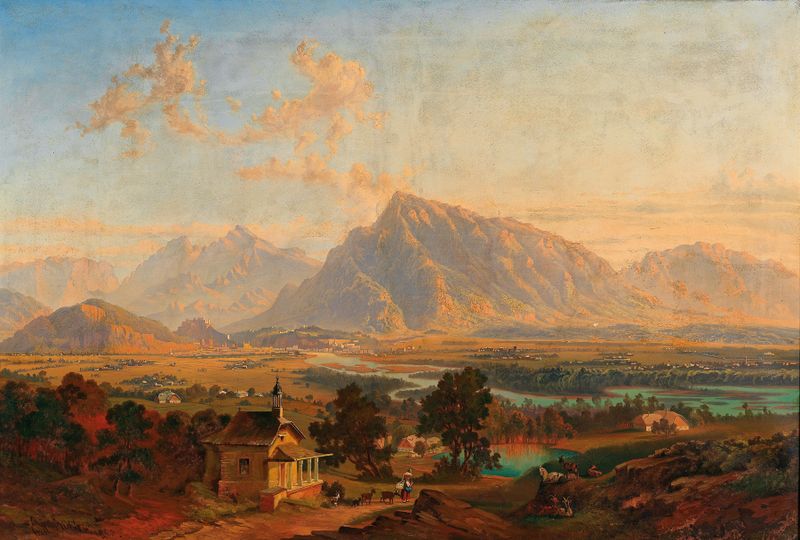
More Architecture Art
Browse all →
The statue of Liberty
Frédéric Auguste Bartholdi

View of Houses in Delft, Known as ‘The Little Street’
Johannes Vermeer

View of Houses in Delft, Known as ‘The Little Street’
Johannes Vermeer

The Cathedral in Rouen. The portal, Grey Weather
Claude Monet

The yellow house
Vincent van Gogh

The Church in Auvers-sur-Oise, View from the Chevet
Vincent van Gogh