
Portrait of a Lady as the Goddess Diana — History & Facts
In the careful brushstrokes of the late 17th century, a quiet power emerges as the viewer encounters a figure who embodies grace, strength, and divine femininity. Look closely at the lady's gaze, which draws you in, commanding your attention with her serene confidence. Notice how the delicate play of light falls on her alabaster skin, casting soft shadows that enhance the contours of her face. The intricate drapery of her gown, rich in amber and gold hues, contrasts against the deep, shadowy background, creating a sense of depth and intimacy.
Every detail, from her elegantly entwined hair to the subtle adornments, reveals the artist's mastery of chiaroscuro, inviting the viewer to linger in a moment of timeless beauty. This portrait transcends mere representation; it speaks to the tension between earthly existence and divine aspiration. The choice to present her as Diana, the goddess of the hunt and protector of women, suggests a complex interplay of power and vulnerability. The gentle smile hints at wisdom, while the poised posture conveys strength.
Each element interlocks, creating a narrative that speaks to the ideals of femininity and virtue during a time when women were often relegated to the background of society. Created between 1675 and 1680, this work emerged during a period of personal and artistic growth for its creator. Godfried Schalcken, amidst the flourishing of Dutch Golden Age painting, sought to elevate the ordinary into the realm of the extraordinary. As he embraced the interplay of light and shadow, he not only captured the essence of his subjects but also reflected the shifting tides of cultural values regarding gender and identity in an increasingly complex world.
More Artworks by Godfried Schalcken
Browse all →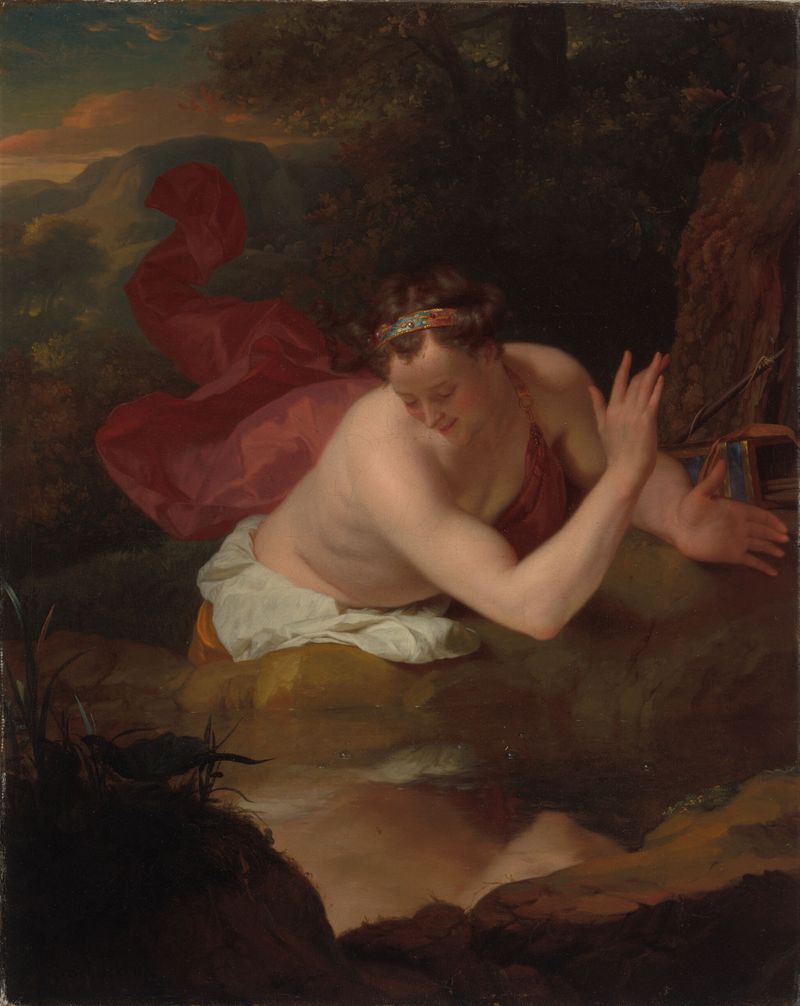
More Portrait Art
Browse all →
Las meninas
Diego Velázquez

Self-portrait with a Bandaged Ear and Pipe
Unidentified artist

Girl with a Pearl Earring
Johannes Vermeer

The Sampling Officials of the Amsterdam Drapers’ Guild, Known as ‘The Syndics’
Rembrandt van Rijn

The Hundred Guilder Print: the man seen on the back in the lower left corner
Rembrandt van Rijn

Portrait of Dr Gachet
Vincent van Gogh