Narcissus — History & Facts
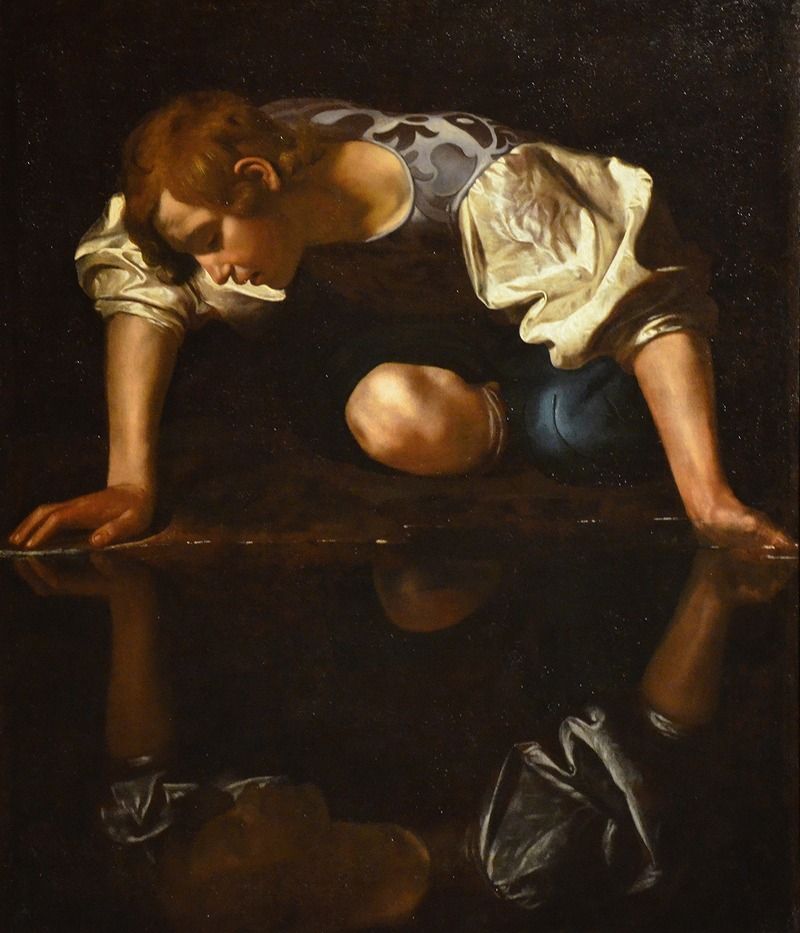
Can paint confess what words never could? The shimmering light that dances across the surface of Narcissus whispers secrets of desire and introspection in ways that language often fails to capture. Look to the center of the composition, where the figure of Narcissus leans over the water’s edge. His gaze, transfixed upon his own reflection, draws the viewer immediately into a moment steeped in both beauty and melancholy. Notice how the soft, golden light envelops his form, sculpting his features with a tender elegance that contrasts sharply against the deep, shadowy backdrop.
Schalcken’s mastery of chiaroscuro enhances the ethereal quality of the scene, illuminating the delicate textures of Narcissus’s skin while allowing the surrounding darkness to evoke a sense of isolation. Each detail reveals layers of meaning: the stillness of the water, mirroring Narcissus’s self-obsession, serves as a poignant reminder of the dangers of vanity. The flowers at his feet, while beautiful, hint at the ephemeral nature of life and the folly of being entranced by one’s own image. The tension between light and shadow encapsulates the duality of admiration and tragedy, suggesting that self-love can lead to profound loneliness. In the late 17th century, Godfried Schalcken created Narcissus during a period marked by burgeoning interest in genre painting and the exploration of human emotion through light.
Working in the Netherlands, at a time when Dutch art was defined by meticulous attention to detail and rich color palettes, he found innovative ways to convey complex narratives through his compositions. This painting stands as a testament to his skill in capturing the interplay of light and shadow, inviting viewers to reflect on the deeper implications of self-obsession that resonate through time.