
Portrait of a Man — History & Facts
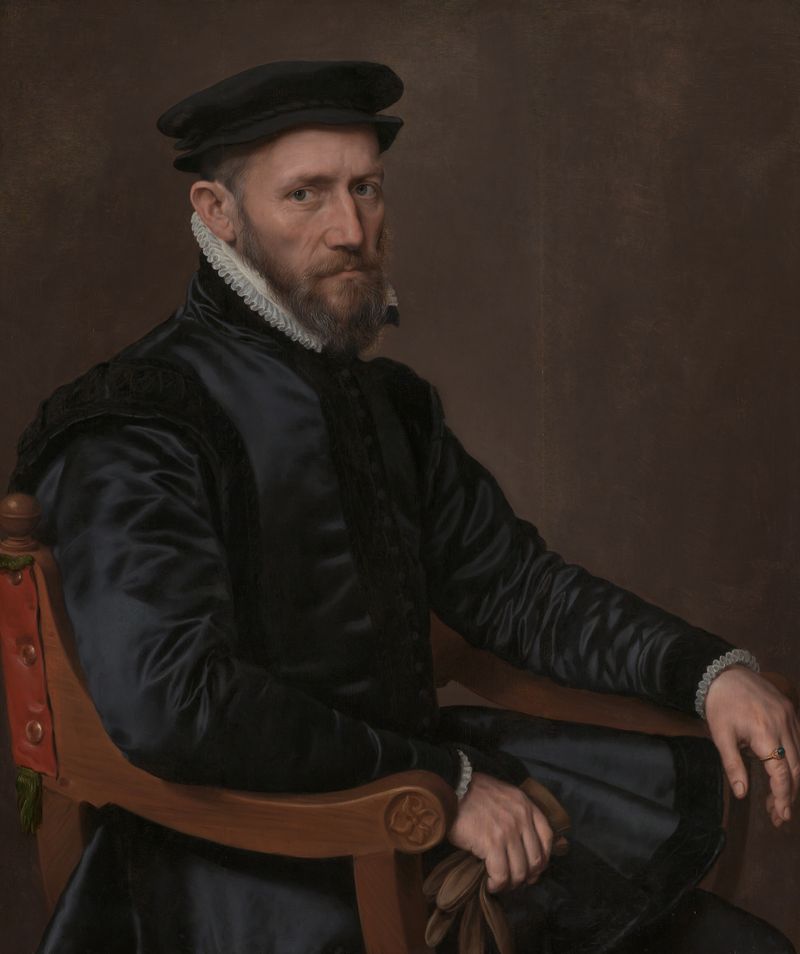
This haunting reflection captures the essence of a face that holds secrets, a visage both mesmerizing and sorrowful, inviting us to look deeper. Focus on the striking gaze of the figure, which seems to pierce through time. Notice how the deep, rich tones of the background contrast with the luminous highlights on the man's face, creating an interplay of shadow and light. The intricate detailing of the fabric, from the finely woven collar to the subtle play of texture in his garments, draws the viewer’s eye, emphasizing his social stature yet hinting at something beyond mere wealth. With every brushstroke, an emotional tension unfolds.
The man's expression exudes a composed exterior, yet subtle signs of unease flicker beneath the surface—perhaps a faint shadow of weariness or loss. The gold embellishments seem to shimmer with a dual meaning: a celebration of status intertwined with the weight of expectations. It questions the nature of ecstasy itself: is it a fleeting joy hidden beneath layers of sorrow? Anthonis Mor created this portrait around 1565, during a time when portraiture was flourishing in Northern Europe.
Living in the Netherlands, he was influenced by the growing demand for detailed likenesses among the affluent class. Mor's work reflected a sophisticated blending of realism and idealism, capturing not just the appearance but the essence of his subjects amid a rapidly changing artistic landscape.
More Artworks by Anthonis Mor
Browse all →
More Portrait Art
Browse all →
Las meninas
Diego Velázquez

Self-portrait with a Bandaged Ear and Pipe
Unidentified artist

Girl with a Pearl Earring
Johannes Vermeer

The Sampling Officials of the Amsterdam Drapers’ Guild, Known as ‘The Syndics’
Rembrandt van Rijn

The Hundred Guilder Print: the man seen on the back in the lower left corner
Rembrandt van Rijn

Portrait of Dr Gachet
Vincent van Gogh