
Portrait of a Seated Woman — History & Facts
In the tranquil embrace of Portrait of a Seated Woman, an air of serene introspection envelops the viewer, inviting them to ponder the depth of emotion captured on canvas. The stillness exudes a quiet power, offering a glimpse into the complex inner world of the subject and the artist. Look to the left, where the woman sits gracefully, her posture poised yet relaxed, draped in rich fabrics that hint at her status. The subtle play of light on her face accentuates the softness of her features, while the deep, muted colors of her attire contrast beautifully with the lighter background, drawing the eye to her contemplative gaze.
The artist’s meticulous attention to detail reveals the textures of her clothing and the delicate luminosity of her skin, creating an intimate connection between the viewer and the subject. Beneath the surface lies a tapestry of emotional complexity. The stillness of her expression invites speculation about the thoughts swirling within her mind; is she lost in daydreams or perhaps weighed down by unspoken burdens? The slight tilt of her head and the positioning of her hands suggest a tension between vulnerability and strength, hinting at the societal constraints of her time. The relationship between the subject and the artist encapsulates an era when women’s voices were often subdued yet undeniably present in the narrative of art. Anthonis Mor painted this portrait around 1565 during a pivotal moment in the history of Northern Renaissance art.
Working in the vibrant cultural hub of the Low Countries, he was influenced by the emerging genre of portraiture, which sought to capture not just likeness but the essence of individuality. Amidst a backdrop of shifting political landscapes and evolving artistic standards, Mor’s work stands as a testament to the enduring power of personal expression and the silent stories etched into the human experience.
More Artworks by Anthonis Mor
Browse all →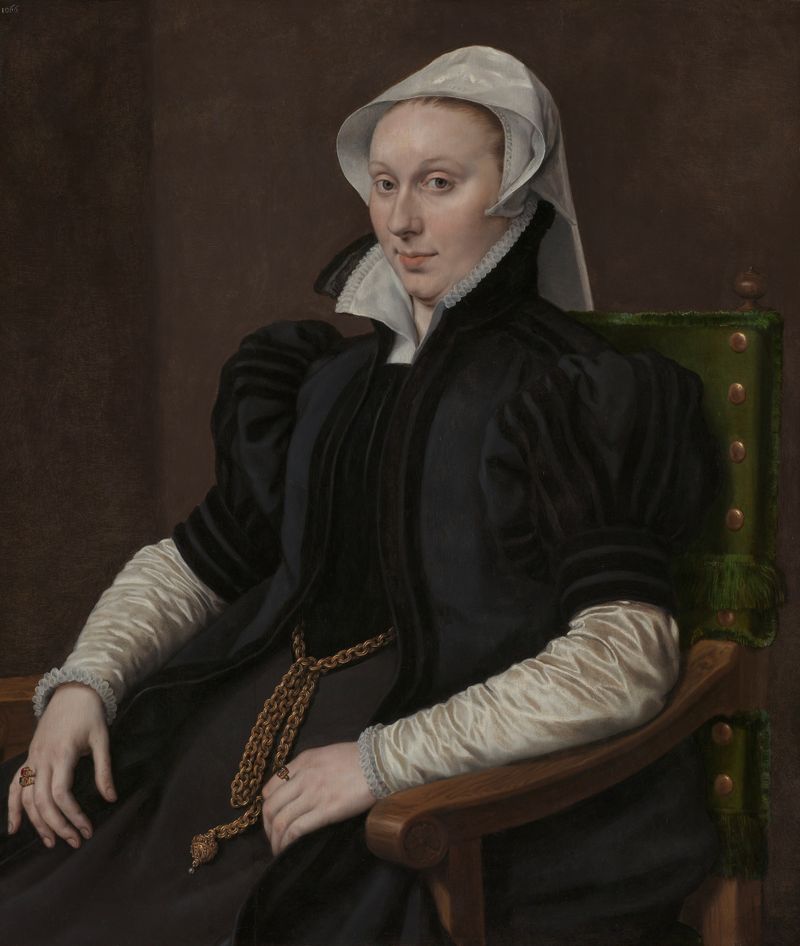
More Portrait Art
Browse all →
Las meninas
Diego Velázquez

Self-portrait with a Bandaged Ear and Pipe
Unidentified artist

Girl with a Pearl Earring
Johannes Vermeer

The Sampling Officials of the Amsterdam Drapers’ Guild, Known as ‘The Syndics’
Rembrandt van Rijn

The Hundred Guilder Print: the man seen on the back in the lower left corner
Rembrandt van Rijn

Portrait of Dr Gachet
Vincent van Gogh