
Portrait of a Woman, according to tradition Marie Louise Elisabeth d'Orléans (1695-1719), Duchesse de Berry, as Flora — History & Facts
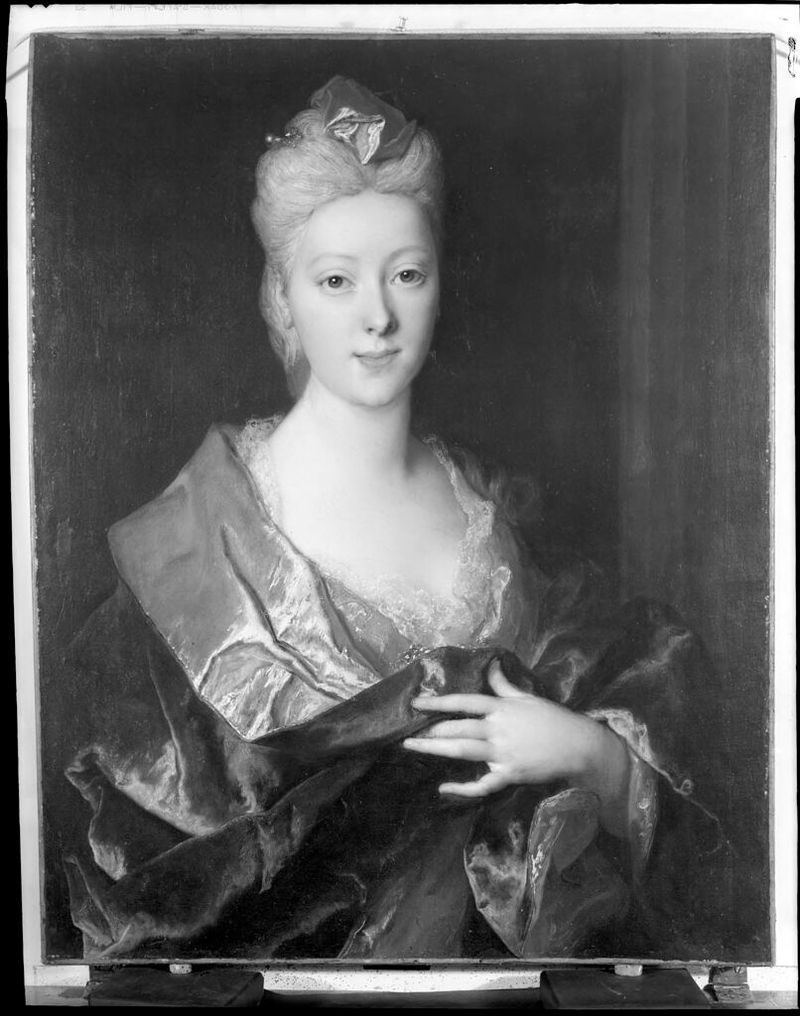
This sentiment resonates profoundly in the exquisite portrayal of fragility and grandeur in the female figure captured within the canvas. As the eye wanders across the artwork, it is drawn into a rich tapestry of serene beauty layered with nuanced emotions that linger just beneath the surface. Look to the left of the canvas where the delicate drapery of Flora's gown cascades elegantly, bathed in a soft, golden light. The intricate detailing of the fabric, coupled with the graceful arch of her posture, invites the viewer to appreciate both the skillful brushwork and the sumptuous palette that Nicolas de Largillière employed.
The warm, earthy tones contrast with the ethereal quality of her skin, accentuating her beauty while simultaneously hinting at the transitory nature of youth and allure. Notice how Flora’s gaze, both alluring and distant, projects an air of wistfulness. The subtle tension between the lushness of her surroundings and the isolation in her expression speaks to the duality of her existence. While she radiates beauty, the slight downturn of her mouth suggests an underlying fragility, a poignant reminder that elegance often masks deeper vulnerabilities, a theme prevalent during the era. Created between 1690 and 1740, this portrait emerged during a time of profound change in the art world, as baroque influences began to wane in favor of more delicate Rococo styles.
Largillière, who lived in Paris and became renowned for his portraits, was deeply influenced by this transition. In this work, he captures the essence of the Duchesse de Berry, intertwining personal charm with the broader cultural shifts of his time, revealing the complexities of femininity in a male-dominated society.
More Artworks by Nicolas de Largillière
Browse all →
More Portrait Art
Browse all →
Las meninas
Diego Velázquez

Self-portrait with a Bandaged Ear and Pipe
Unidentified artist

Girl with a Pearl Earring
Johannes Vermeer

The Sampling Officials of the Amsterdam Drapers’ Guild, Known as ‘The Syndics’
Rembrandt van Rijn

The Hundred Guilder Print: the man seen on the back in the lower left corner
Rembrandt van Rijn

Portrait of Dr Gachet
Vincent van Gogh