
Self-Portrait — History & Facts
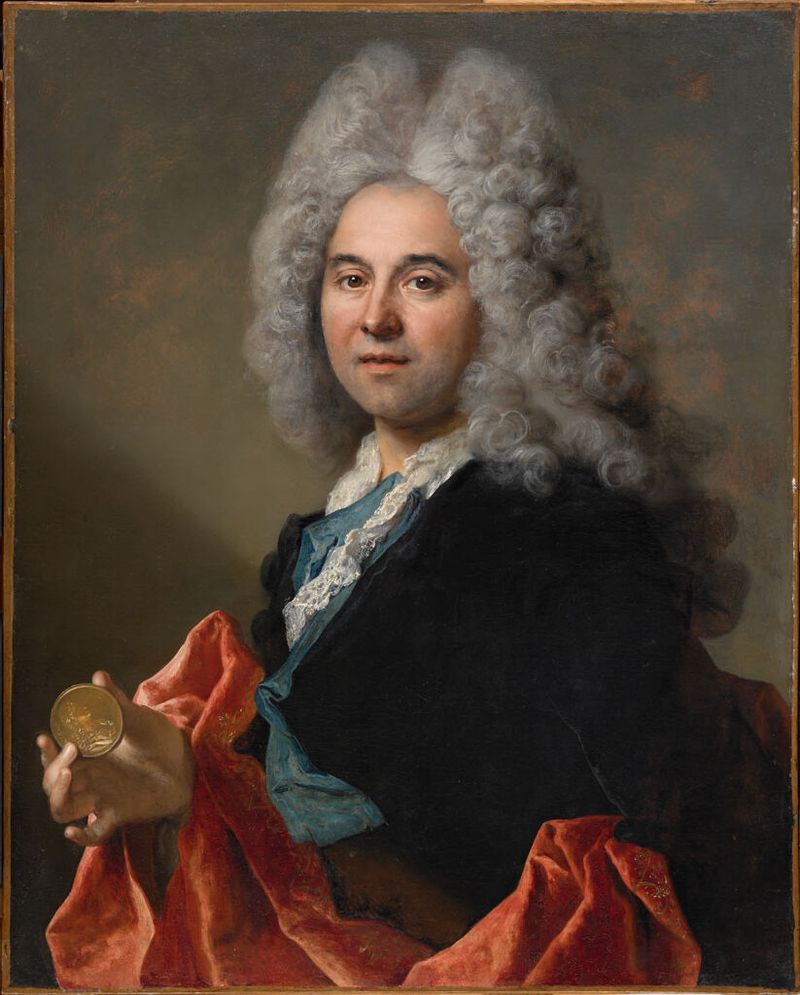
Could a single brushstroke hold eternity? In Self-Portrait, the artist captures not just a face but the essence of personal rebirth and artistic resilience, inviting us to reflect on the transformative power of creation. Look to the left at the striking gaze of the artist, his expression a mixture of confidence and contemplation. The rich, warm tones of ochre and deep browns envelop him, contrasting with the cooler shades of the background that seem to recede into shadow. Notice how the light softly highlights his features, almost as if illuminating the thoughts swirling behind his eyes.
The careful rendering of texture in the fabric of his attire speaks to both skill and a deep awareness of how to portray not just the man, but the history he embodies. Within the painting lies a complex interplay of identity and legacy. The subtle smile hints at a quiet self-assurance, while the slight turn of his head suggests an openness to the world yet a rootedness in self-knowledge. The way the brushwork shifts from bold strokes around the face to finer details in the background emphasizes a journey from the known to the unknown, reflecting the artist’s exploration of his own existence and aspirations.
Each stroke, a whisper of rebirth, invites viewers to consider their own narratives of self-discovery. In the early 18th century, as Nicolas de Largillière painted this self-portrait in France, he stood at the forefront of the Baroque movement. During this period, he was establishing his reputation as a leading portraitist, navigating a landscape of artistic innovation, rising patronage, and the cultural shifts of post-Louis XIV France. This moment in his career marked both personal and professional growth, intertwining his identity with the evolving art scene around him.
More Artworks by Nicolas de Largillière
Browse all →
More Portrait Art
Browse all →
Las meninas
Diego Velázquez

Self-portrait with a Bandaged Ear and Pipe
Unidentified artist

Girl with a Pearl Earring
Johannes Vermeer

The Sampling Officials of the Amsterdam Drapers’ Guild, Known as ‘The Syndics’
Rembrandt van Rijn

The Hundred Guilder Print: the man seen on the back in the lower left corner
Rembrandt van Rijn

Portrait of Dr Gachet
Vincent van Gogh