
Portrait of Adriaen Paets, Director of the Rotterdam Chamber of the Dutch East India Company, elected 1734 — History & Facts
Could beauty survive in a century of chaos? This question lingers, echoing through the delicate strokes and poised expression captured in an era where tumult reigned. Look closely at the subject’s striking gaze, which draws you in with a combination of authority and introspection. Notice how the artist employs a rich palette, often favoring deep earth tones and vibrant oranges, to convey both the weight of prestige and the warmth of human emotion. The intricate details in the lace collar and the shimmering fabrics create a visual contrast that speaks to the opulence of the time, inviting the viewer to appreciate both the man and the society he represents. Yet, beyond the surface lies a narrative of tension — the subject sits resolute, surrounded by symbols of trade and ambition, while a subtle shadow looms in the background, hinting at the darker realities of colonialism and exploitation.
The careful balance between light and shadow reflects not only his personal journey but also the collective conscience of the age. Each brushstroke captures a moment frozen in time, echoing the struggles between power and moral truth. Dionys van Nijmegen painted this portrait between 1734 and 1765, a period marked by significant shifts within the Dutch East India Company and the broader world of art. As the director of the Rotterdam Chamber, Adriaen Paets was intimately involved in the complex interplay of commerce and culture.
This work emerged during a time when artists began to explore individuality in portraiture, reflecting the growing importance of personal legacy amidst the chaos surrounding them.
More Artworks by Dionys van Nijmegen
Browse all →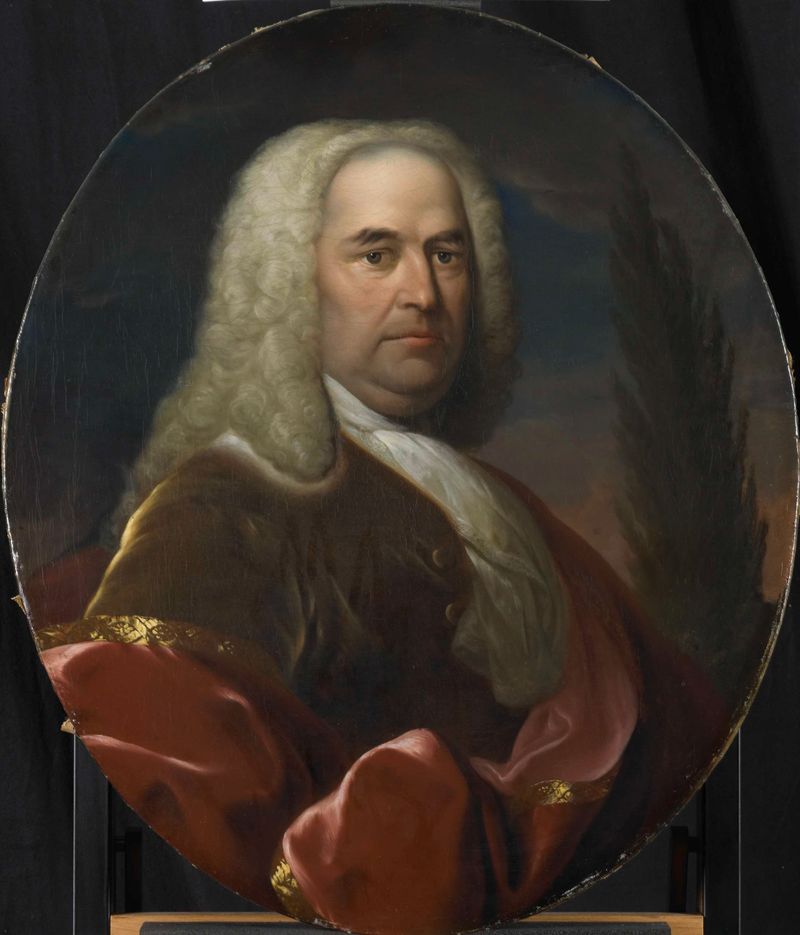
More Portrait Art
Browse all →
Las meninas
Diego Velázquez

Self-portrait with a Bandaged Ear and Pipe
Unidentified artist

Girl with a Pearl Earring
Johannes Vermeer

The Sampling Officials of the Amsterdam Drapers’ Guild, Known as ‘The Syndics’
Rembrandt van Rijn

The Hundred Guilder Print: the man seen on the back in the lower left corner
Rembrandt van Rijn

Portrait of Dr Gachet
Vincent van Gogh