
Portrait of Hugo du Bois, Director of the Rotterdam Chamber of the Dutch East India Company, elected 1734 — History & Facts
This silent observer holds the weight of a life steeped in both power and fragility, reflecting a moment that teeters on the edge of eternity. Begin with the gaze, where you’ll see Hugo du Bois, resplendent and commanding. Look to the left of the canvas, where the warm light bathes the rich folds of his velvet attire, accentuating the meticulous brushwork. Notice how his hand rests confidently on the arm of a chair, yet his fingers are curled slightly as if caught in a moment of hesitation, subtly hinting at the layers of responsibility he bears. Amidst the opulent backdrop, the juxtaposition of the richly decorated textiles and the solemnity in du Bois’s expression reveals a deeper tension.
The intricate details, from the glint of the gold embroidery to the somber shadows, suggest that power is not an absolute, but rather a delicate balance. The emotional undertones of pride mixed with vulnerability echo the fragility inherent in his status as a director of the Dutch East India Company, a role that demands strength yet renders one susceptible to the tides of fortune. Dionys van Nijmegen created this striking portrait during a pivotal moment in the 18th century, a time when the Dutch East India Company was both prosperous and perilous. Painted between 1734 and 1798, the artist captured not only the likeness of a prominent figure but also the fragile interplay of ambition and vulnerability amid a changing world in art and commerce.
More Artworks by Dionys van Nijmegen
Browse all →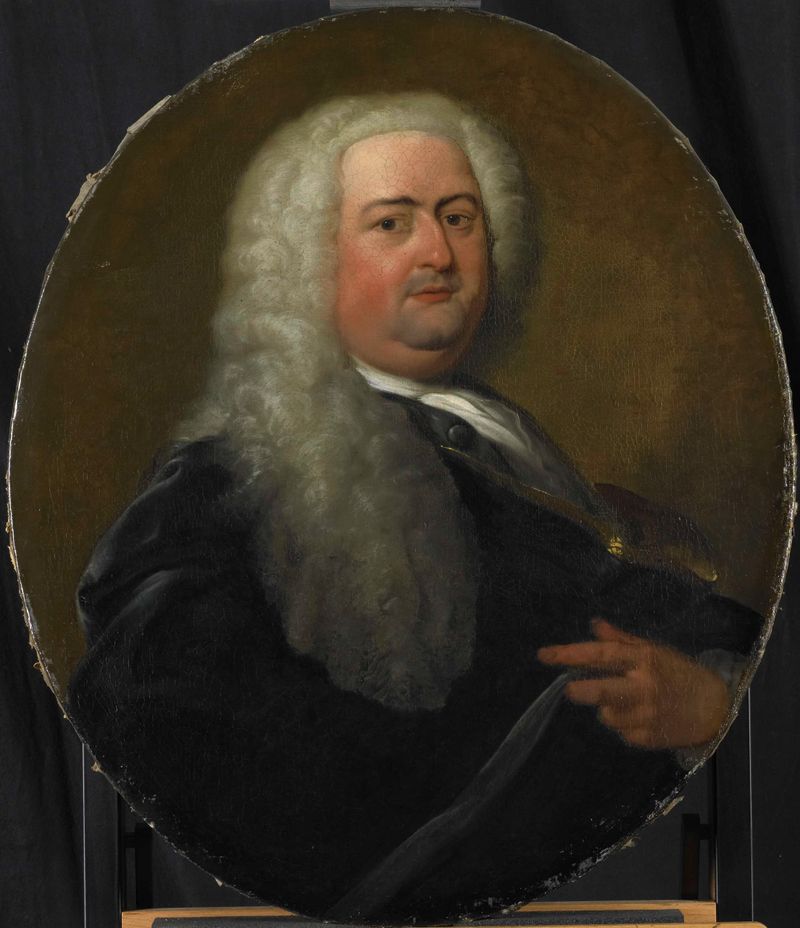
More Portrait Art
Browse all →
Las meninas
Diego Velázquez

Self-portrait with a Bandaged Ear and Pipe
Unidentified artist

Girl with a Pearl Earring
Johannes Vermeer

The Sampling Officials of the Amsterdam Drapers’ Guild, Known as ‘The Syndics’
Rembrandt van Rijn

The Hundred Guilder Print: the man seen on the back in the lower left corner
Rembrandt van Rijn

Portrait of Dr Gachet
Vincent van Gogh