
Portrait of Jochem Hendricksz Swartenhont (1566-1627) — History & Facts
When did color learn to lie? The brushstrokes in this portrait whisper secrets of solitude and unspoken narratives, drawing the viewer into a world where loneliness wears the guise of dignity. Look to the subject’s face, where the gentle chiaroscuro illuminates the contours of Jochem Hendricksz Swartenhont’s solemn expression. The deep, rich palette of ochres and browns envelops him, contrasted by the delicate whites and muted blues of his attire. Notice how the light falls upon his hands, clasped tightly together, revealing a quiet tension that speaks volumes about his inner life.
Each intricate detail, from the lace at his collar to the texture of his skin, invites a closer examination of the weight he carries. Within this portrait lies a poignant tension between presence and absence; the figure is surrounded by an aura of isolation, despite the elaborate furnishings that suggest status and wealth. The careful rendering of his attire contrasts sharply with the emptiness in his gaze, hinting at the emotional distance that can exist even amidst material abundance. The composition balances the grandeur of the setting with an underlying vulnerability, allowing viewers to feel the dissonance of his existence. In 1627, the artist crafted this work during a time of personal and societal upheaval in the Netherlands, where the clash of commerce and art mingled with the shadows of individual despair.
Pickenoy, having established a reputation for portraiture, was navigating his own artistic journey while reflecting the complexities of his subjects’ lives. This piece serves not only as documentation of a historical figure but as an exploration of the human condition during a turbulent era.
More Artworks by Nicolaes Eliasz Pickenoy
Browse all →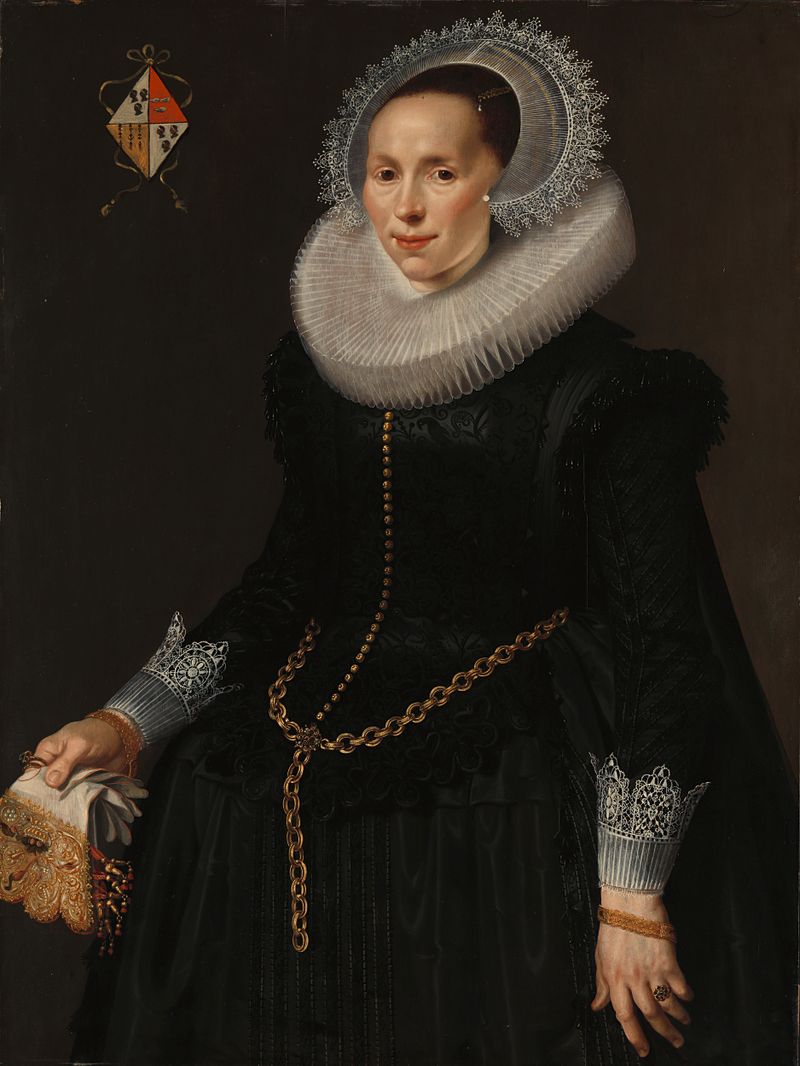


More Portrait Art
Browse all →
Las meninas
Diego Velázquez

Self-portrait with a Bandaged Ear and Pipe
Unidentified artist

Girl with a Pearl Earring
Johannes Vermeer

The Sampling Officials of the Amsterdam Drapers’ Guild, Known as ‘The Syndics’
Rembrandt van Rijn

The Hundred Guilder Print: the man seen on the back in the lower left corner
Rembrandt van Rijn

Portrait of Dr Gachet
Vincent van Gogh