
Portrait of Maria Joachimsdr Swartenhont (1598-1631) — History & Facts
Who listens when art speaks of silence? In the stillness of Portrait of Maria Joachimsdr Swartenhont, the weight of mortality is palpable, coaxing viewers to ponder the fleeting nature of existence. Look to the left at the eloquent tilt of her head, framed by rich, dark textiles that absorb the ambient light. The deep crimson of her dress contrasts with the pale skin, drawing attention to her serene yet contemplative expression. Each brushstroke reveals meticulous attention to detail, from the intricate lace at her throat to the delicate shine in her eyes.
The soft glow of the background emphasizes her presence, creating a palpable distance that invites introspection. In the subtle interplay of colors and textures, one can sense an underlying tension between beauty and transience. The artist captures not only a likeness but also a whisper of her inner world—the poised façade hinting at unspoken thoughts. The lace itself, a symbol of both adornment and fragility, reflects the ephemeral nature of life, reminding us that even beauty is bound to fade.
The pose and the soft lighting evoke both admiration and melancholy, as if inviting the viewer to engage in a dialogue with mortality. Nicolaes Eliasz Pickenoy painted this work in 1627, a period when portraiture flourished in the Netherlands amidst a backdrop of economic prosperity and social change. Influenced by the emerging baroque style, Pickenoy's attention to detail and psychological depth marked him as a notable figure in Dutch art. At this time, the art world was increasingly exploring themes of identity and existence, as artists began to delve into the complexities of human experience, reflecting broader societal contemplations on life and death.
More Artworks by Nicolaes Eliasz Pickenoy
Browse all →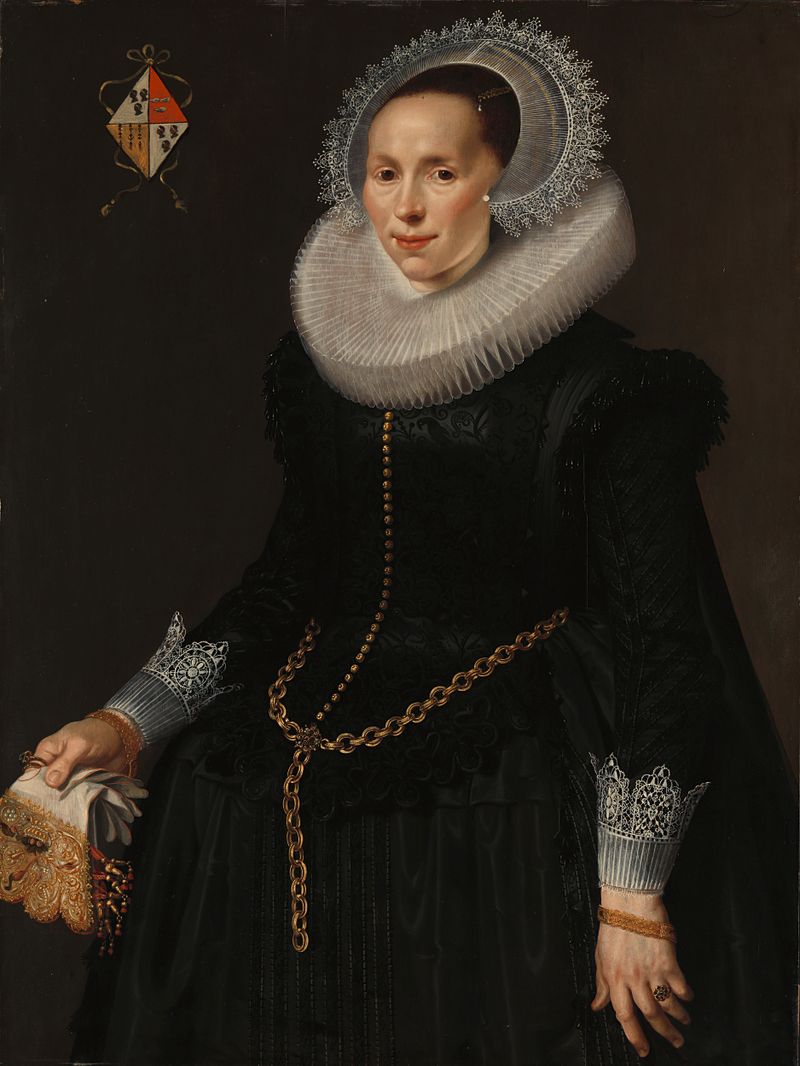


More Portrait Art
Browse all →
Las meninas
Diego Velázquez

Self-portrait with a Bandaged Ear and Pipe
Unidentified artist

Girl with a Pearl Earring
Johannes Vermeer

The Sampling Officials of the Amsterdam Drapers’ Guild, Known as ‘The Syndics’
Rembrandt van Rijn

The Hundred Guilder Print: the man seen on the back in the lower left corner
Rembrandt van Rijn

Portrait of Dr Gachet
Vincent van Gogh