
Portrait of Madame Gaignat — History & Facts
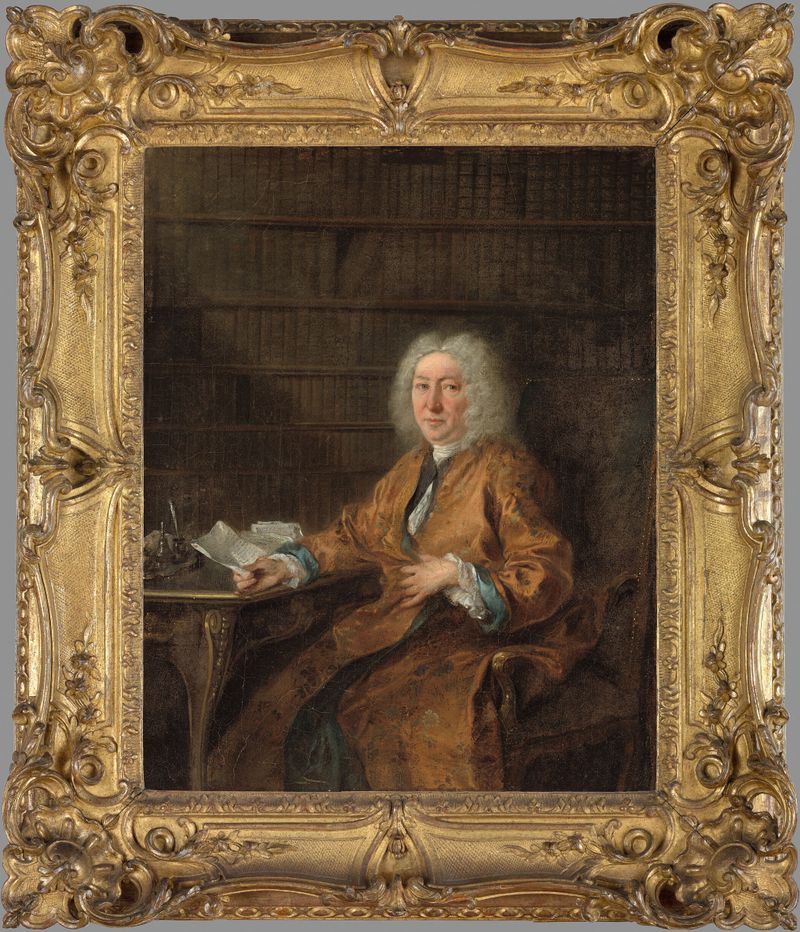
Can paint confess what words never could? In Portrait of Madame Gaignat, the canvas whispers secrets of grace and poise, inviting the viewer into an intimate dialogue between artist and subject. Look closely at the luminous skin tones that seem to breathe with life; the artist skillfully captures the delicate interplay of light and shadow across Madame Gaignat's features. Focus on her serene expression and the subtle smile that dances at the corners of her lips, suggesting a depth of character beneath a polished exterior. Notice how the soft drapery of her gown envelops her figure, echoing the elegance of her posture, while the warm, muted palette creates an atmosphere of tranquility and refinement. Yet, within this poised representation lies a tension between appearance and reality.
The intricate details of her attire speak to social status, embodying the era’s values, yet her gaze suggests an inner world of unspoken thoughts. The juxtaposition of her poised demeanor and the slightly tilted head hints at vulnerability, evoking a sense of awe at her humanity beneath her social mask. In the 18th century, the artist created this work during a period rich with artistic exploration and the rise of portraiture as a societal mirror. At that time, Lancret was immersed in the vibrant art scene of Paris, where the Rococo style flourished, and personal expression began to intertwine with public identity.
This painting not only reflects the artist's mastery but also encapsulates the complexities of femininity and societal expectation of the day.
More Artworks by Nicolas Lancret
Browse all →
More Portrait Art
Browse all →
Las meninas
Diego Velázquez

Self-portrait with a Bandaged Ear and Pipe
Unidentified artist

Girl with a Pearl Earring
Johannes Vermeer

The Sampling Officials of the Amsterdam Drapers’ Guild, Known as ‘The Syndics’
Rembrandt van Rijn

The Hundred Guilder Print: the man seen on the back in the lower left corner
Rembrandt van Rijn

Portrait of Dr Gachet
Vincent van Gogh