
Portrait of the Governors of the Kloveniersdoelen — History & Facts
Within its painted surface, each brushstroke captures the essence of faith in leadership, fraternity, and the harsh realities of governance. Look closely at the figures assembled in Portrait of the Governors of the Kloveniersdoelen. The men, clad in rich fabrics and intricately defined textures, command attention as they stand united. Notice how the warm, golden light bathes their faces, illuminating proud expressions that convey authority and ambition.
The dark background contrasts sharply with their garments, emphasizing the solemnity of their gathering. Each gesture—an outstretched hand, a thoughtful gaze—tells a story of camaraderie and shared purpose. Beneath the surface, the painting reveals its deeper truths. The tension between light and shadow reflects the duality of their roles as both protectors and enforcers.
The varying postures hint at unspoken dynamics; some figures exude confidence, while others appear pensive, suggesting the burden of their responsibilities. The absence of a definitive background speaks to the timelessness of their struggles, allowing contemporary viewers to question the nature of authority and trust in governance. Completed in 1642, this work emerged during a period when Govert Flinck was establishing his reputation in Amsterdam. At that time, the Dutch Republic was grappling with external threats and internal strife, making representations of leadership all the more poignant.
Flinck painted this piece as part of a growing interest in group portraiture, capturing not just individual likenesses but a collective identity that resonated deeply in the art world of the era.
More Artworks by Govert Flinck
Browse all →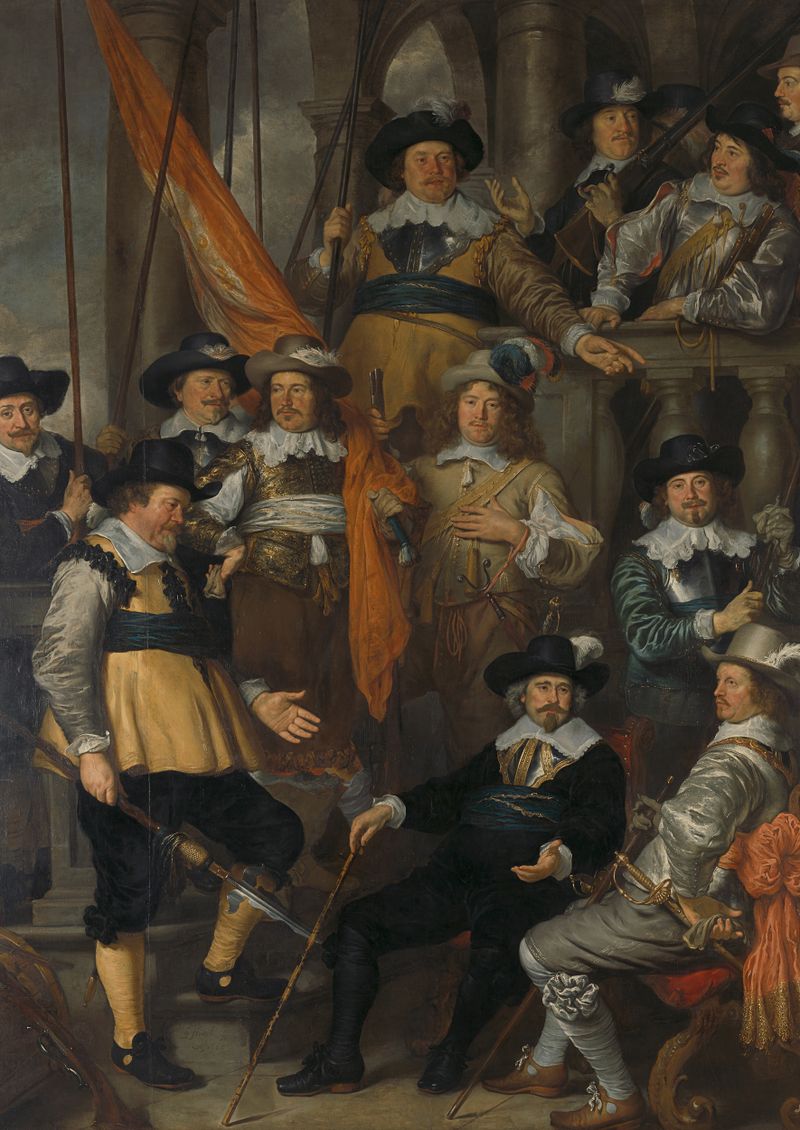

More Portrait Art
Browse all →
Las meninas
Diego Velázquez

Self-portrait with a Bandaged Ear and Pipe
Unidentified artist

Girl with a Pearl Earring
Johannes Vermeer

The Sampling Officials of the Amsterdam Drapers’ Guild, Known as ‘The Syndics’
Rembrandt van Rijn

The Hundred Guilder Print: the man seen on the back in the lower left corner
Rembrandt van Rijn

Portrait of Dr Gachet
Vincent van Gogh