Prancing Horse — History & Facts
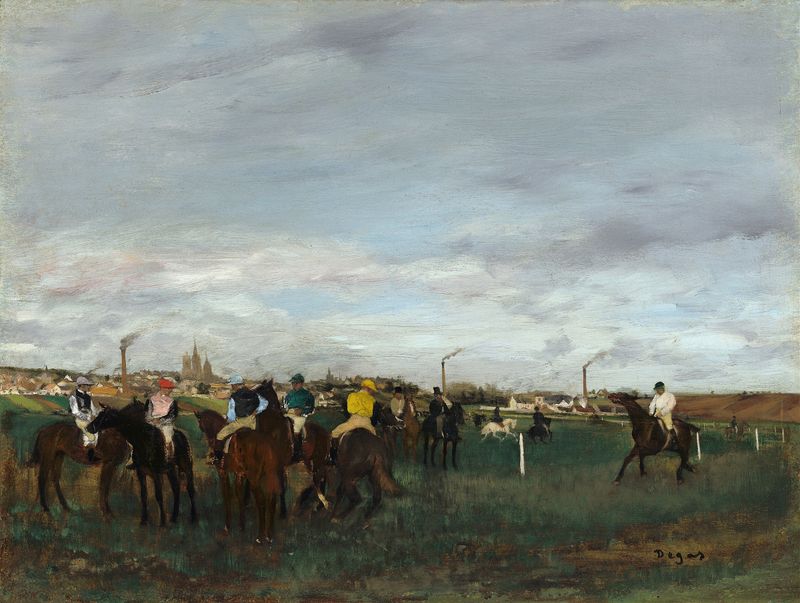
The embodiment of beauty, this painting invites us to explore how raw power can be transformed into elegance through art. Start your journey by focusing on the prancing horse at the center of the canvas. Notice how the horse’s powerful legs are captured mid-gallop, exuding energy and vitality. The artist's fluid brushstrokes create a dynamic sense of movement, while the rich browns and whites of the horse’s coat contrast beautifully against a muted background, emphasizing its form.
Look closely at the muscles rippling beneath the glossy surface, illustrating both strength and grace, as the light dances across its body. Beneath this exuberance, the painting resonates with deeper themes of freedom and wildness. The horse, a symbol of untamed energy, stands as a testament to the spirit of nature, yet its poised stance suggests a moment of controlled power, inviting viewers to reflect on the balance between strength and elegance. The subtle brushwork around the hooves hints at the tumultuous earth beneath, reminding us that beauty often emerges from chaos. Created between 1808 and 1812, this work reflects the heightened interest in equestrian themes during the Romantic era.
The artist, a follower of Géricault, was steeped in a world where the admiration for nature’s raw beauty was at its peak, and the fascination with the animal kingdom served as a canvas for exploring deeper emotional landscapes. As such, this piece embodies a transitional moment in art, where the boldness of Romanticism began to intertwine with a growing appreciation for aesthetic refinement.
More works by Follower of Jean Louis André Théodore Géricault