
Priest King or Lily Prince (reproduction after a relief from the Palace of Knossos, Crete) — History & Facts
Where does light end, and longing begin? The ethereal beauty captured in this reproduction draws us into a realm where the divine meets the human experience, stirring a quiet ecstasy just beneath the surface. Look closely at the delicate figure, draped in flowing robes, whose presence commands attention. Focus on the intricate details of the face, where subtle expressions mirror an inner world of desire and contemplation. Notice how the colors—soft hues of blue and gold—interplay with the light, transforming this figure into a beacon of both reverence and intimacy.
Each stroke invites the viewer to ponder the spiritual significance of the subject, blurring the lines between myth and reality. Here, contrasts emerge: the stillness of the figure is set against the dynamic background, suggesting a world rich with stories yet untold. The relief’s textured surface evokes the passage of time, as ancient echoes resonate within modern hearts. The juxtaposition of earthly materials with divine themes beckons contemplation of our own yearnings, perpetually reaching for something just out of grasp. Emile Gilliéron or his son recreated this masterpiece in the late 19th to early 20th century, during a period marked by a fascination with ancient civilizations and their artistry.
As archaeology flourished, Gilliéron found himself at the forefront of a revival, interpreting the remnants of Crete's storied past and infusing them with a contemporary sensibility. This work stands as a testament to the enduring allure of antiquity, a bridge between eras that continues to resonate today.
More Artworks by Emile Gilliéron or son
Browse all →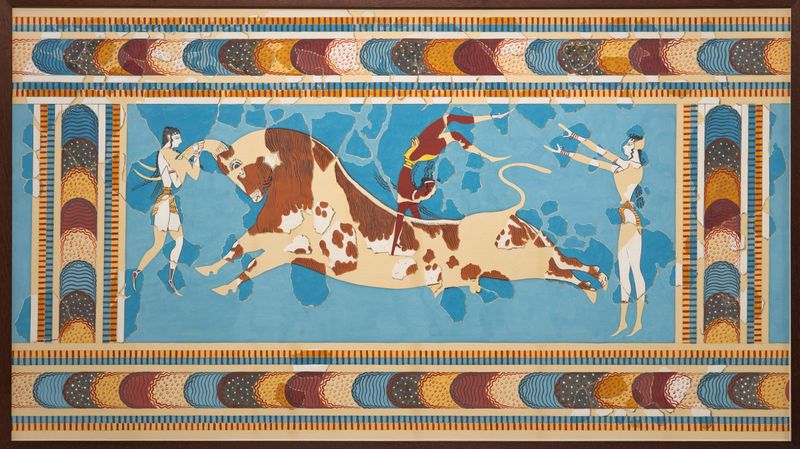
Acrobats Leaping over a Bull (after a wall painting from the Palace of Knossos, Crete)
Emile Gilliéron or son
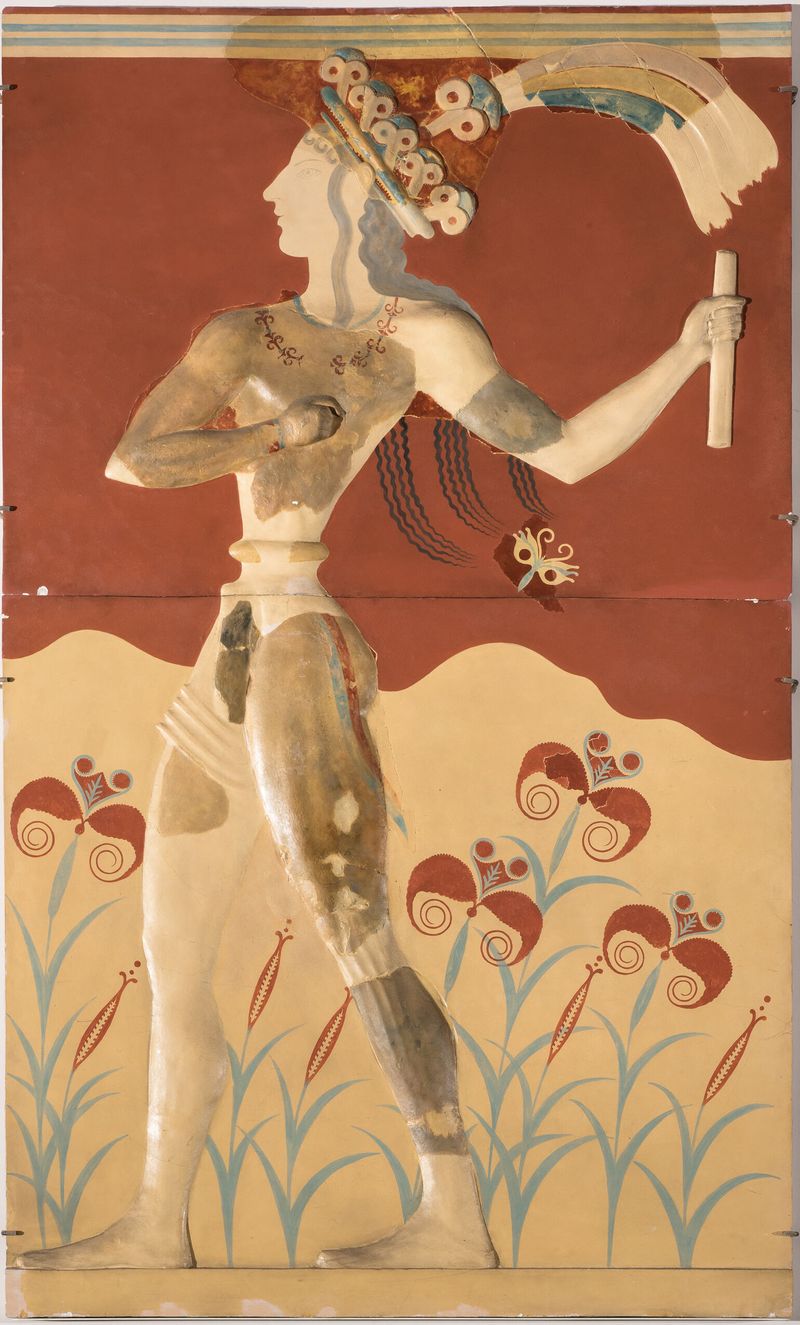
Top Section of Priest King or Lily Prince (reproduction after a relief from the Palace of Knossos, Crete)
Emile Gilliéron or son
Bottom Section of Priest King or Lily Prince (reproduction after a relief from the Palace of Knossos, Crete)
Emile Gilliéron or son





