
Profielportret van een dame — History & Facts
This notion invites us to reflect on the essence of truth captured on canvas, where the silent narrative of a subject unfolds. Focus on the lady's serene profile, her delicate features rendered with meticulous precision. The soft light caresses her skin, illuminating her graceful neck and highlighting the gentle flow of her hair. Look closely at the subtle variations in color; the artist expertly balances warm tones against cooler hues, creating a sense of depth and intimacy.
Each stroke feels intentional, leading the viewer’s eye through the contour of her face, inviting a connection that transcends time. Within this portrait lies a complex interplay of dignity and vulnerability. The lady's poised expression suggests strength, yet her downcast gaze hints at unspoken stories and emotions, sparking curiosity about her inner world. The careful attention to her garments—the interplay of light and shadow—hints at social status while evoking the timelessness of human experience.
Here, truth is not merely about appearance; it evokes a deeper understanding of identity and the layers beneath the surface. Gabriel Jacques de Saint-Aubin painted this work between 1740 and 1840, a time when portraiture was evolving in France. As the art world began to embrace Romanticism, he skillfully combined traditional techniques with a growing interest in character and emotion. This period of his career reflected a personal exploration of truth, not just in the subjects he depicted, but in the broader context of society’s shifting values.
More Artworks by Gabriel Jacques de Saint-Aubin
Browse all →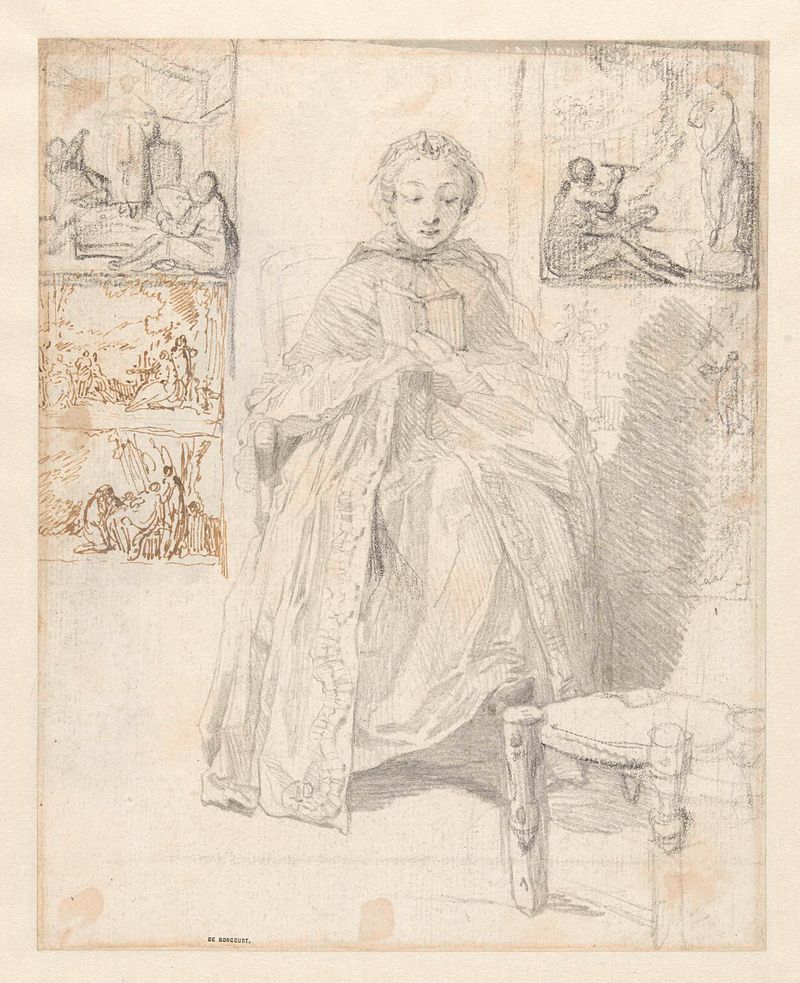
More Portrait Art
Browse all →
Las meninas
Diego Velázquez

Self-portrait with a Bandaged Ear and Pipe
Unidentified artist
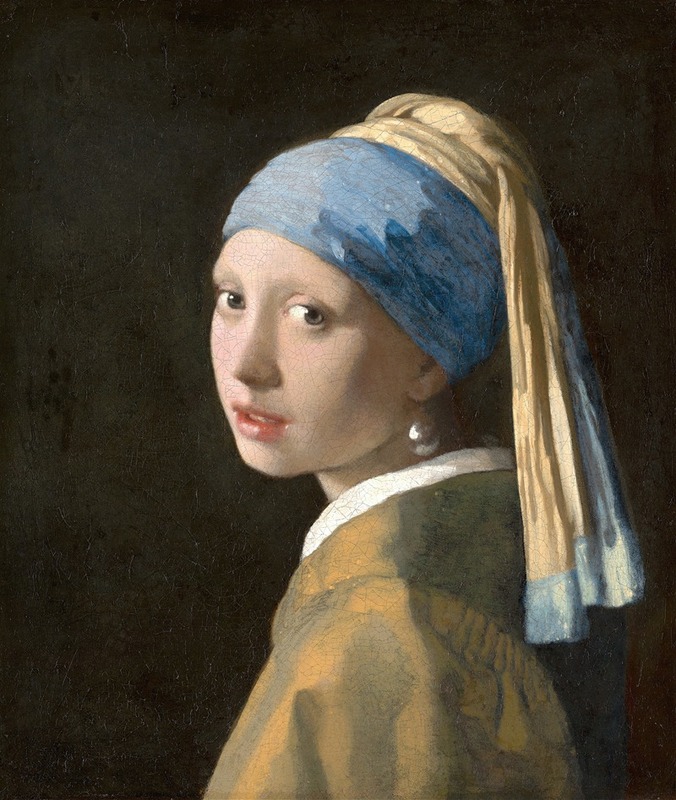
Girl with a Pearl Earring
Johannes Vermeer

The Sampling Officials of the Amsterdam Drapers’ Guild, Known as ‘The Syndics’
Rembrandt van Rijn

The Hundred Guilder Print: the man seen on the back in the lower left corner
Rembrandt van Rijn

Portrait of Dr Gachet
Vincent van Gogh