Allegorie op de dood van Voltaire — History & Facts
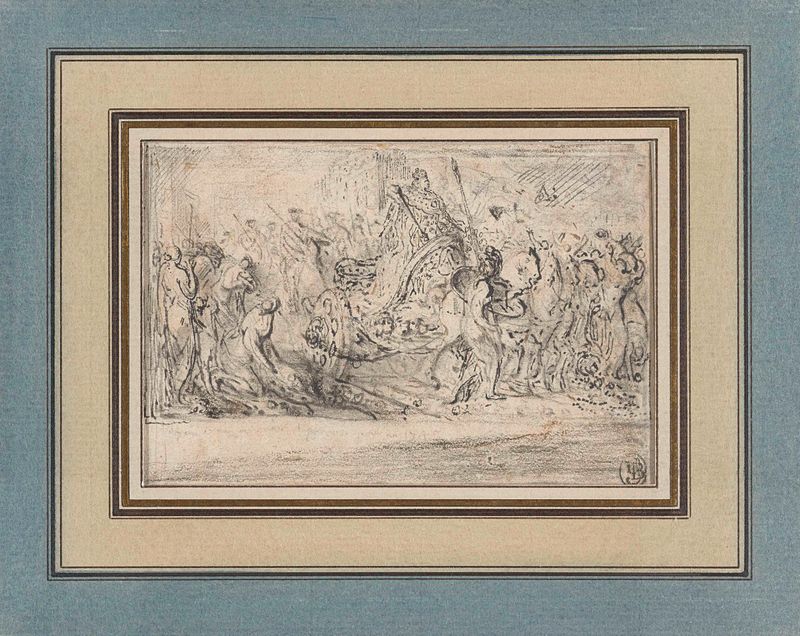
In a world constantly teetering on the edge of the known and the unknown, the dance of life and death beckons us to contemplate rebirth. Focus your gaze on the central figure, where a spectral representation of Voltaire emerges from swirling clouds of tumult and disruption. The muted palette of soft grays and whites juxtaposes with the vivid colors of the surrounding allegorical figures, drawing you in like a moth to a flame. Notice how the delicate brushwork blurs the boundaries between the ethereal and the corporeal, creating an atmosphere thick with tension yet ripe with potential. Look closely at the figures that surround the deceased philosopher.
The contrasting expressions of sorrow and enlightenment speak to the duality of legacy; one side mourns the loss, while the other embraces the wisdom bequeathed. The light flickering through the swirling chaos hints at the idea of resurrection—suggesting that while Voltaire's physical form may have departed, his ideas and influence will perpetually resonate. The interplay of shadow and illumination invites viewers to reflect on the transient nature of life and the enduring power of thought. Created between 1778 and 1780, this artwork emerged during a transformative period for Saint-Aubin, who was deeply engaged in the cultural shifts of Enlightenment thought.
As the French Revolution loomed on the horizon, the artist's reflections on mortality and human intellect mirror the societal conversations surrounding freedom, reason, and the questioning of dogma. In the backdrop of rapidly changing times, this piece encapsulates the tension between the ephemeral nature of existence and the eternal legacy of great minds.