Prospekt af Præstø — History & Facts
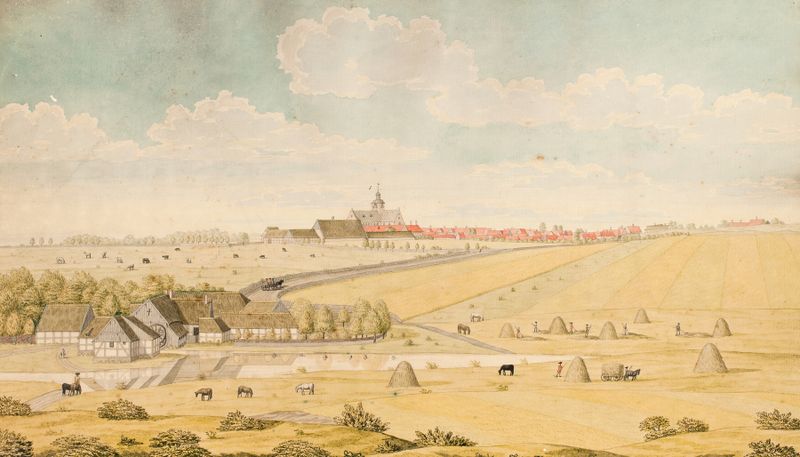
Is this a mirror — or a memory? The landscape stretches infinitely, inviting viewers to lose themselves in the paradox of what is seen and what is felt. Look to the left at the gentle curve of the shoreline, where the earth meets the water in a delicate embrace. The artist employs soft blues and greens, lending a serene quality to the scene, while the towering clouds above swirl dramatically. Notice how the light falls upon the buildings, casting long shadows that dance across the landscape, creating a harmony between the natural and the constructed.
Each element is carefully placed, leading the eye across the canvas, inviting exploration of both foreground and background. Within the tranquil expanse lies a tension between permanence and transience. The boats anchored in the harbor are symbols of human endeavor, yet their stillness hints at the fleeting nature of time. The distant hills serve as a reminder of the continuity of the land, contrasting with the transient human activity depicted.
This balance speaks to the artist's contemplation of existence itself, where nature and mankind coexist yet remain distinctly separate. In 1753, Bruun painted this piece while residing in Denmark, a time marked by a burgeoning interest in natural landscapes within the realm of art. The mid-18th century saw the rise of the Rococo style, yet Bruun's work is more subdued, reflecting a personal introspection amid the overarching artistic trends. His focus on balance and harmony reveals a deeper understanding of the relationship between humanity and its environment, painting a moment that resonates through time.