Quay in Bruges — History & Facts
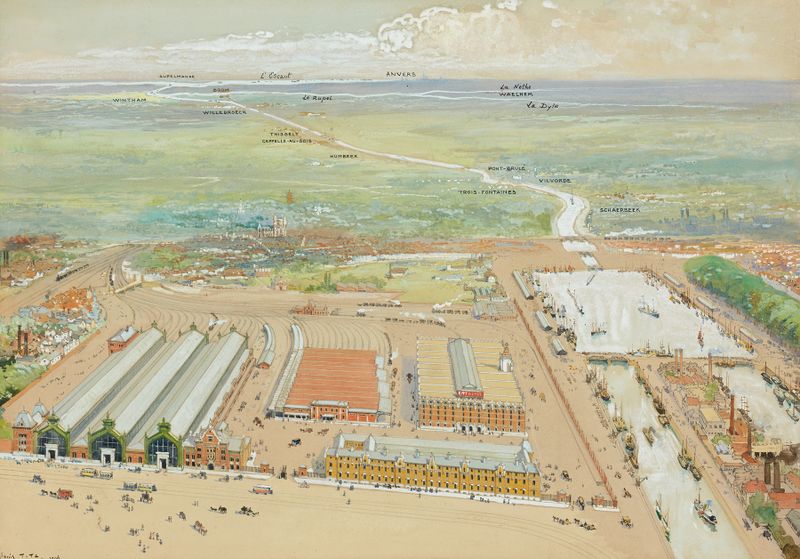
Could beauty survive in a century of chaos? The canvas finds its voice in the quiet embrace of Bruges, where time seems to stand still amid a world accelerating toward turmoil. Look to the right at the water's edge, where gentle ripples mirror the soft hues of the sky. The cool blues and warm ochres invite your gaze across the tranquil canal, leading to the detailed architecture of historic buildings that frame the scene. Every brushstroke captures the delicate interplay of light and shadow, revealing Titz’s mastery of impressionistic techniques, blending colors to evoke a sense of harmony amidst the urban landscape. Yet, there is an undercurrent of tension.
The figures strolling along the quay are absorbed in their own worlds, perhaps unaware of the impending changes that the 20th century would usher in. The stark contrast of their tranquility against the looming structures hints at the clash between the past and an uncertain future. The calmness of the scene holds a quiet urgency, suggesting that these moments of beauty may be fleeting in the face of time’s relentless march. In 1911, Titz captured Quay in Bruges during a period of artistic exploration in Europe, as movements like Impressionism and Post-Impressionism were flourishing.
Living in a time marked by rapid social change and the onset of modernity, he sought solace in the timeless beauty of his surroundings. This piece reflects not only his personal vision but also a collective yearning for permanence in an ever-evolving world.