Redwood Forest, Yosemite Valley — History & Facts
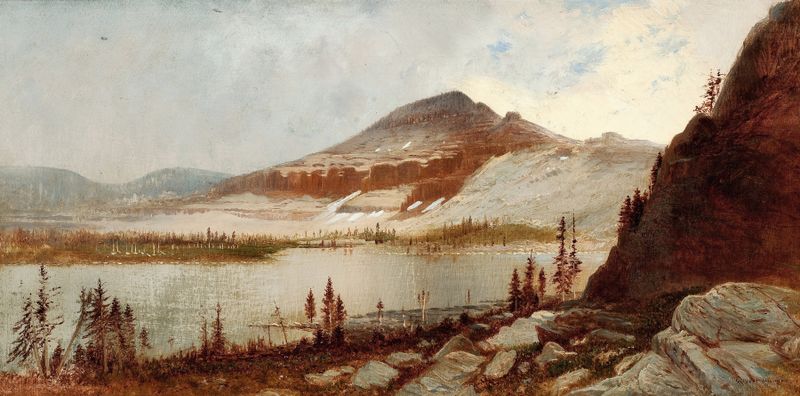
Can beauty exist without sorrow? In the serene embrace of a towering redwood forest, the majestic trees whisper secrets of a world both timeless and fleeting. Look to the left at the lush green foliage, vibrant and alive, each leaf seemingly capturing the essence of sunlight filtering through the branches. Notice how the artist employs rich earth tones to convey the grounding presence of the ancient trees, drawing your gaze toward the textured bark that tells stories of resilience. The harmonious composition invites you into a sanctuary, where the vertical lines of the trunks create a natural cathedral, evoking a sense of reverence and peace. Yet, within this tranquil scene, rests a subtle tension between permanence and transience.
The dappled light that plays along the forest floor suggests a fleeting moment in time, hinting at the inevitable cycle of life and decay. The grandeur of the redwoods stands in contrast to their own mortality, igniting a desire within the viewer to hold onto this beauty, even as time marches on. During the period when this artwork was created, Gilbert Davis Munger was deeply engrossed in the natural beauty of the American landscape, particularly in the late 19th century. This was a time marked by the burgeoning conservation movement, as well as the evolving perspective on the American wilderness in art.
Munger’s work reflects not only his personal exploration of these revered landscapes but also a collective yearning for connection to nature amidst the rapidly industrializing world.