Refuge — History & Facts
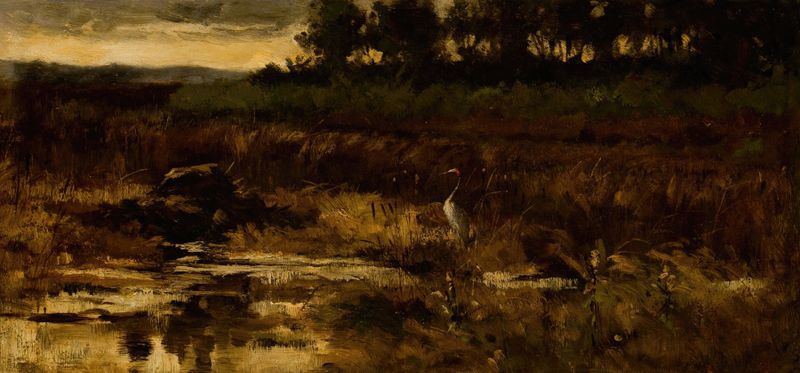
Can beauty exist without sorrow? In Refuge, Frederick Stuart Church captures the paradox of serenity amidst the tumult of transformation. Look to the left at the towering trees, their lush canopies a vivid reminder of nature’s resilience. The interplay of light and shadow dances across the landscape, revealing a tranquil pond that serves as the heart of this composition. Delicate brushwork creates ripples on the water's surface, while dappled sunlight filters through the foliage, inviting viewers to pause and reflect.
The soft palette of greens and browns invokes a sense of calm, contrasting sharply with the underlying tension suggested by the title. Beneath this idyllic façade lie deeper currents of meaning. The stillness of the scene belies the socio-political upheaval of the early 20th century—a world on the brink of revolution. The serene refuge depicted may symbolize an escapism from the chaos of modernity, yet it simultaneously acknowledges the fragility of such beauty.
The subtle inclusion of wildlife hints at a delicate balance in nature, suggesting that peace is often hard-won and fleeting. In 1912, Church was working in the United States, amidst changing times for both the country and the art world. His commitment to capturing the beauty of the American landscape reflected a broader movement towards appreciating nature during a period of industrialization. This work stands as a testament to his artistic vision and a poignant reminder of the duality of human experience—where beauty often walks hand in hand with sorrow.