Return from the field — History & Facts
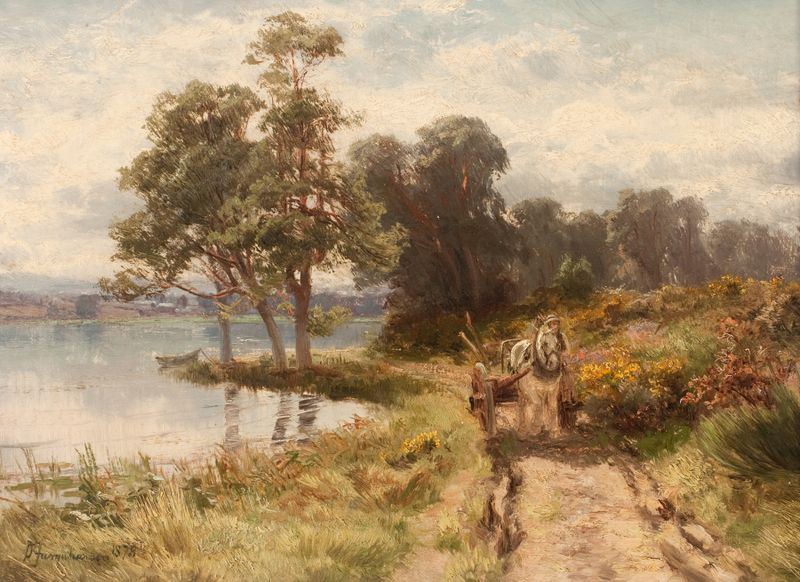
What if silence could speak through light? In the stillness of twilight, a moment unfolds where the world is hushed, waiting for a revelation to emerge from the shadows. Look to the left at the soft glow that emanates from the horizon, casting a gentle amber hue across the fields. The brushwork is loose yet deliberate, with each stroke capturing the fleeting nature of dusk. The subtle gradations of color blend harmoniously, drawing the viewer's eye towards the silhouette of a returning figure framed against the expansive sky.
Every element, from the billowing clouds to the receding landscape, contributes to a sense of quiet anticipation. In this landscape, contrasts abound. The vibrant warmth of the sunset juxtaposes the cool shadows enveloping the earth, symbolizing the tension between labor and rest. The solitary figure, possibly a farmer, embodies both exhaustion and fulfillment, suggesting a journey that transcends the physical space.
Each blade of grass seems to whisper tales of toil, while the heavenly light implies a moment of reflection, urging contemplation on the cycles of life and nature. David Farquharson painted this work during a period of great change in the late 19th century, when artists began to explore more personal and emotional interpretations of nature. Living in Scotland, he was influenced by the romantic ideals of the landscape movement. As rural life was rapidly evolving, this painting captures a poignant moment of transition, both in the natural world and in the artist’s ongoing dialogue with it.