Rhenish river landscape with countryfolk — History & Facts
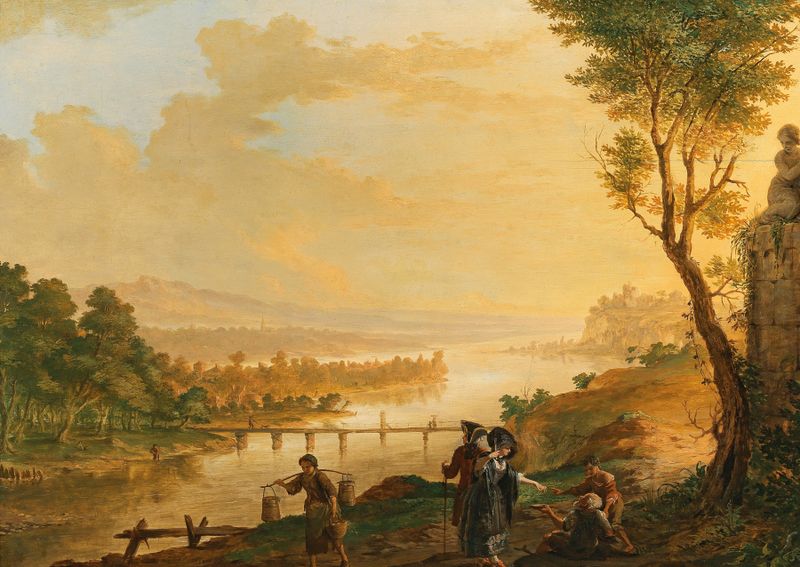
In a world often defined by chaos, tranquility finds its sanctuary in art, inviting us to pause and reflect. Look to the left at the gentle curves of the river, where the soft undulations cradle reflections of trees, the colors mirroring the sky’s serene blues and warm earth tones. The figures of countryfolk are scattered across the canvas, engaged in daily activities, their muted clothing blending harmoniously with the landscape. Notice how the light softly bathes the scene, illuminating the highlights of the water while casting delicate shadows that evoke a sense of depth and dimensionality. Within this idyllic setting lies a profound exploration of connection to nature and community.
The juxtaposition of the calm river against the figures’ labor hints at the balance between human endeavor and the serene rhythms of the natural world. Each character's posture and expression tell stories of simple joys and shared experiences, revealing the deeper emotional currents that bind humanity to the land. The overall composition fosters a meditative harmony, inviting viewers to step into this tranquil existence that feels timeless. Franz Hochecker painted this landscape amid a period of evolving artistic exploration, likely in the late 19th century, when Romanticism’s appreciation for nature began to intertwine with burgeoning realism.
At this time, he was part of a wave of artists seeking to capture the essence of rural life, influenced by the idyllic landscapes of his surroundings. The work reflects not only the artist’s deep connection to the Rhine region but also a broader cultural moment that valued authenticity and emotional resonance in landscape painting.