River Landscape – On the Thames — History & Facts
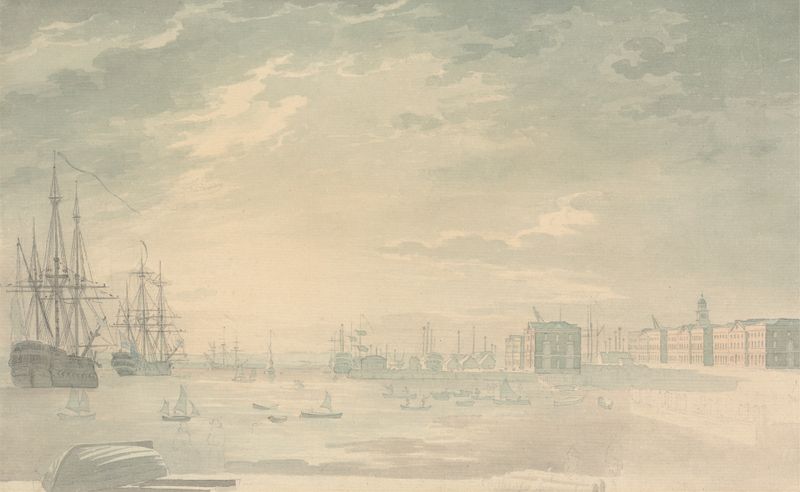
What secret hides in the quiet of the canvas? In River Landscape – On the Thames, serenity intertwines with nature’s beauty, inviting reflection and reverie. Look to the left at the gentle curve of the river, where soft blue and green hues merge with the distant silhouette of trees. The delicate brushwork captures the shimmering light dancing upon the water’s surface, creating a sense of movement that contrasts with the stillness of the landscape. Notice how the clouds, brushed with warm tones, seem to cradle the scene, infusing it with a tranquil glow that evokes a peaceful afternoon. At first glance, the painting presents a picturesque vista; however, the gentle ripples in the water whisper of deeper currents—silent stories of the past, perhaps, or the fleeting nature of time itself.
The balanced composition suggests harmony, yet the quietude may mask underlying tensions, urging viewers to explore their own emotions as they stand before the landscape. Each element, from the delicate reflections in the water to the distant horizon, serves to heighten this sense of introspection. During the time Fisher created this piece, he was immersed in the artistic movements of the late 19th century, which favored naturalism and the depiction of serene landscapes. This period was marked by a growing appreciation for outdoor settings, reflecting a desire for tranquility amidst the rapid changes of industrial life.
Fisher’s work captures this ethos, presenting a moment of stillness that resonates with a universal yearning for beauty and peace.