River Landscape with a Ferry Boat — History & Facts
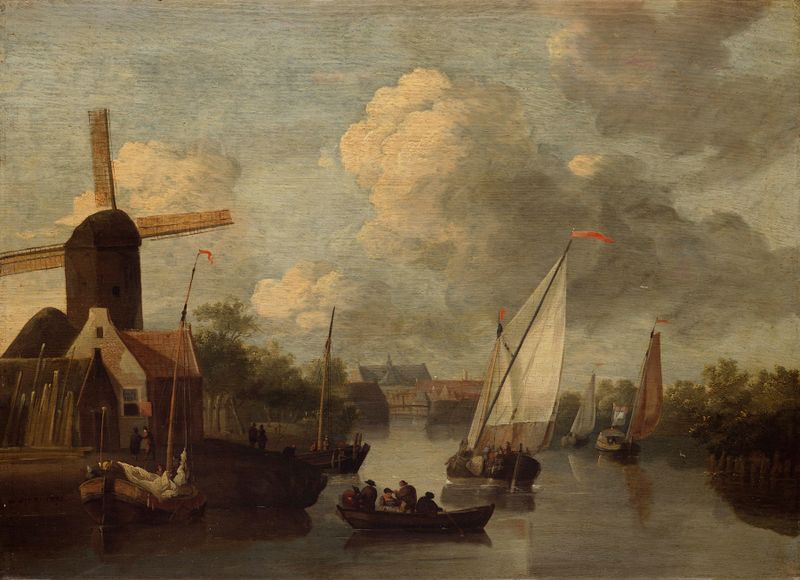
In its stillness, it reveals not only beauty but the unsettling truth beneath the surface. As we stand before this work, a quiet dread lingers in the air, urging us to confront what lies just beyond our sight. Look to the left at the ferry boat, its silhouette stark against the turbulent waters. The strokes of deep greens and muted blues create a tension that vibrates through the painting, almost as if the river itself holds its breath.
Notice how the light skims the surface, glinting off the waves, offering a deceptive calm that belies the potential danger lurking beneath. The composition invites your eye to follow the winding river, guiding you towards the horizon where uncertainty hangs like fog. Beneath the serene facade, there’s an emotional undercurrent that raises questions of vulnerability and fear. The ferry, a vessel of transition, symbolizes an inescapable journey, while the looming clouds hint at a storm, both literal and metaphorical.
This juxtaposition of tranquility and foreboding compels the viewer to reflect on their own uncertainties, reminding us that calm waters can still conceal perilous depths. The work emerges from a time when Wigerus Vitringa was honing his craft, likely in the late 17th century, a period rich with exploration and burgeoning landscapes in art. Vitringa, influenced by the Dutch masters, painted during an era of both stability and unrest in Europe. The landscapes he crafted were not merely representations of nature but reflections of the human psyche, capturing moments where beauty and trepidation coexist, an interplay that resonates deeply today.