River Landscape with Castles and Fishermen — History & Facts
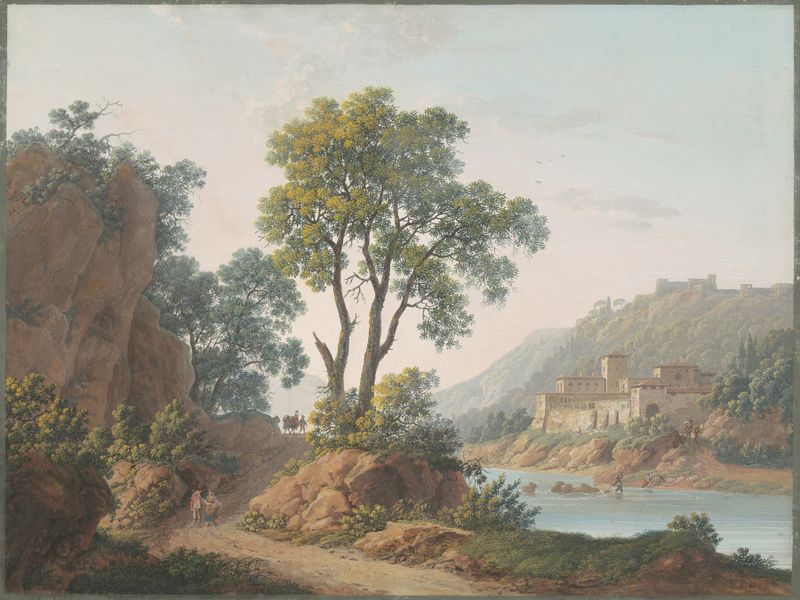
In a world where emptiness often looms large, art becomes a sanctuary of possibility and transformation. Look to the left at the cascading river, its gentle curves drawing the eye towards the distant horizon. Notice how the soft blues and greens harmonize with the pastel hues of the sky, creating a serene yet fleeting moment. The castles on the banks stand in silent majesty, their reflections barely disturbing the calm waters, inviting contemplation on permanence amidst the transient nature of life. In the foreground, fishermen cast their nets, embodying both hope and labor, engaged in the eternal struggle against emptiness.
The stillness of the scene is paradoxical, suggesting a deeper undercurrent of longing and isolation. The castles symbolize the human desire for stability and legacy, contrasting with the ephemeral nature of the fishermen's daily toil and the ever-shifting river. Baron Louis-Albert-Guillain Bacler d'Albe painted this work in 1817, amidst the Romantic movement that emphasized emotion and nature's power. At this time, he was living in France, where artists sought new ways to express their complex feelings about a rapidly changing world.
The era was marked by social upheaval, yet this piece offers a moment of quiet reflection, capturing both the beauty and the solitude of existence.