River Landscape with Nude Mariner — History & Facts
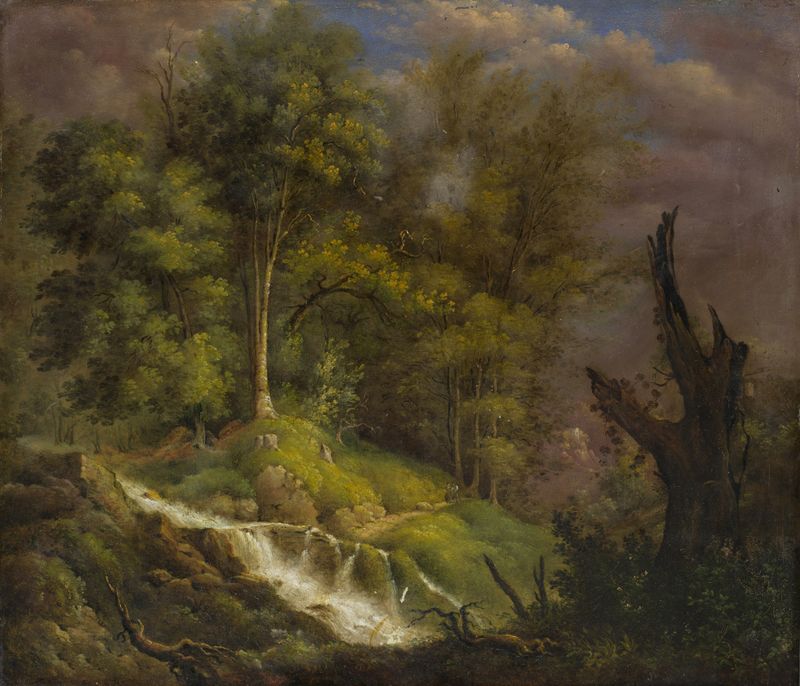
Can beauty exist without sorrow? In River Landscape with Nude Mariner, the juxtaposition of the serene river and the vulnerable figure challenges our perceptions of tranquility and decay. Look to the foreground where the mariner stands, his form a striking contrast against the lush landscape. The artist employs soft, muted colors—gentle greens and blues—that envelop the scene, evoking a sense of peace. Notice how the sunlight dances upon the water, glimmering like fleeting memories while casting intricate shadows that hint at the figures’ fragility.
The composition draws the eye from the nude mariner, who gazes into the horizon, to the tranquility of the river, creating a tension between human vulnerability and the eternal flow of nature. Beneath this serene exterior lies an undercurrent of decay. The mariner's nudity symbolizes vulnerability, stripped of artifice, while the fading beauty of the surrounding flora whispers of the inevitable passage of time. The subtle interplay of light and shadow evokes a bittersweet recognition—nature thrives, yet life is ephemeral.
The juxtaposition of the lush landscape and the solitary figure serves as a poignant reminder of the transient nature of existence, inviting reflection on the interplay between beauty and loss. Isaak Fürstenberger painted this work in 1822, a time marked by significant shifts in art and society. Living in the wake of Romanticism, he sought to capture the transcendence of nature while grappling with the human experience. As he navigated his personal journey, the tension between the ideal and the real permeated his canvas, reflecting both the beauty and the sorrow inherent in life’s fleeting moments.