River Tamar, near Endsleigh, Devon — History & Facts
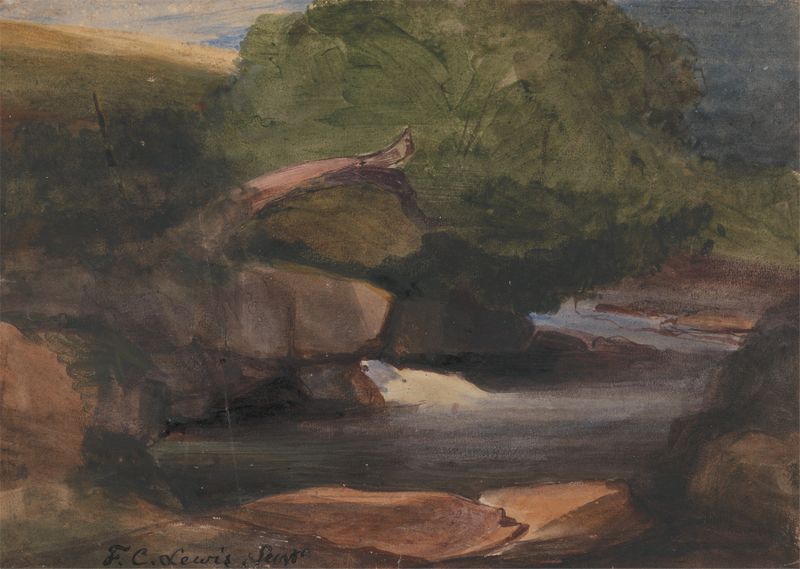
Can paint confess what words never could? In the languid embrace of the River Tamar, an obsession whispers through the brushstrokes, revealing nature’s secrets one layer at a time. Look to the foreground, where the shimmering water mirrors the dappled canopy above. The palette is a delicate blend of greens and blues, evoking a sense of serenity and depth. Notice how the gentle ripples catch the light, creating a dance of reflections that beckon the viewer closer.
The artist’s meticulous attention to detail underscores the texture of the foliage, inviting you to trace each leaf with your eyes as if you might feel its coolness against your fingertips. Beneath this picturesque facade lies a tension within tranquility. The contrasting elements of stillness and movement speak to a deeper yearning—both for the landscape and perhaps the fleeting nature of human connection. Along the riverbank, a solitary figure appears almost lost amid the grandeur, suggesting a longing that is both personal and universal.
The scene, while beautiful, hints at the solitude that can accompany such an intense love for the natural world, one that almost borders on obsession. In 1832, Frederick Christian Lewis the Elder was engaged deeply with depicting landscapes in England, reflecting a shift towards romanticized nature in art. At this time, he was exploring themes of beauty and isolation in the countryside, as industrialization began to alter the pastoral landscapes he cherished. The tranquility of River Tamar, near Endsleigh, Devon encapsulates this moment of transition, as artists sought to preserve the serene beauty of nature against the encroaching tide of modernity.