Römische Ruinen, links ein Brunnen, mit Staffage — History & Facts
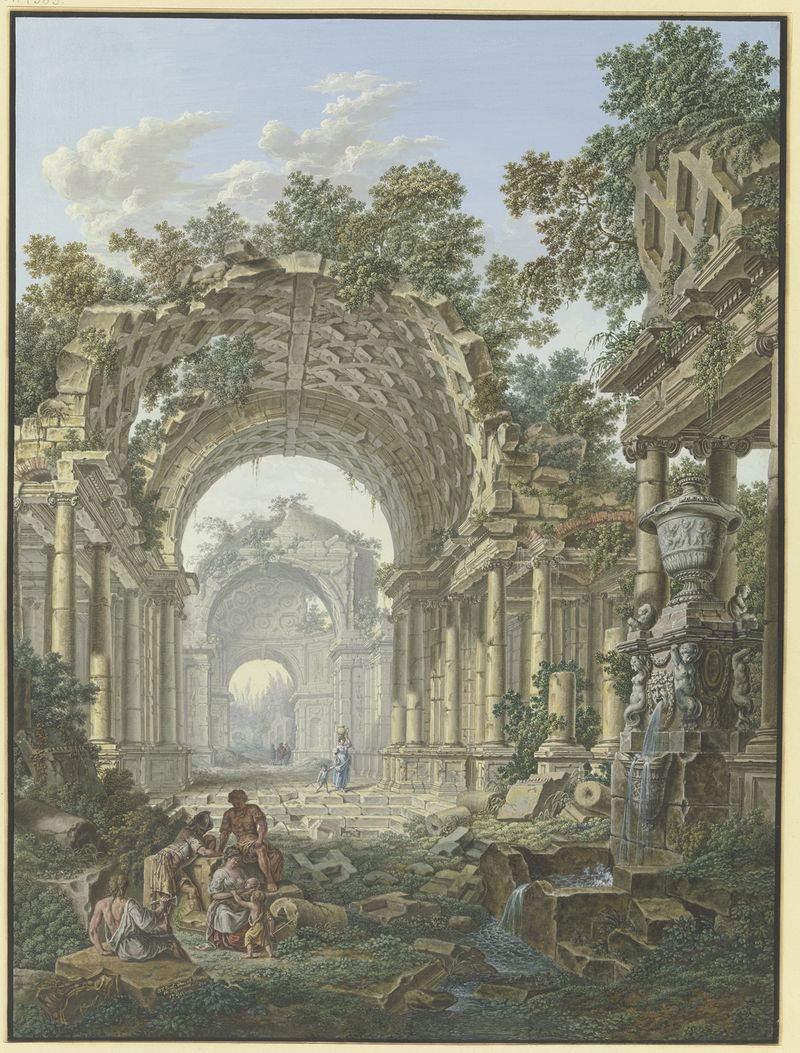
In its silent embrace, Römische Ruinen, links ein Brunnen, mit Staffage captures an obsession with the remnants of a bygone era, where nature entwines with human artifice, whispering stories of the past. Look closely at the left side of the canvas, where a tranquil fountain emerges, its water shimmering like liquid crystal. The ruins rise majestically in the background, their crumbling stonework softened by the lush greenery that flanks them. Notice the delicate interplay of light and shadow: the sun bathes the scene in a warm glow, enhancing the vibrant hues of the foliage while casting a contemplative shade over the remnants of civilization.
The figures scattered throughout, often referred to as “staffage,” add a sense of scale and life, inviting an intimacy that contrasts with the grandeur of the ruins. This artwork transcends mere representation, delving into themes of decay and nostalgia. The juxtaposition of the fountain—symbolizing vitality and leisure—against the dilapidated structures evokes a poignant reflection on the passage of time. Each crumbling brick seems to sigh with history, while the lively figures suggest a search for meaning amid the remnants of greatness.
Such contrasts reveal our obsession with the past: a yearning to reclaim what has been lost, perhaps even to find solace in the beauty of impermanence. Created in 1789, this piece emerges from a period of burgeoning Romanticism, where artists like Jean François Gout sought to capture the sublime and the emotional depth of nature and history. Painted during a time of significant political upheaval in France, Gout's work reflects a fascination with ancient cultures and ideals, set against a backdrop of societal change and uncertainty. As the veil of the Enlightenment lifted, his exploration of ruins became a poignant commentary on the fragility of human achievement.