Road by the Volga river — History & Facts
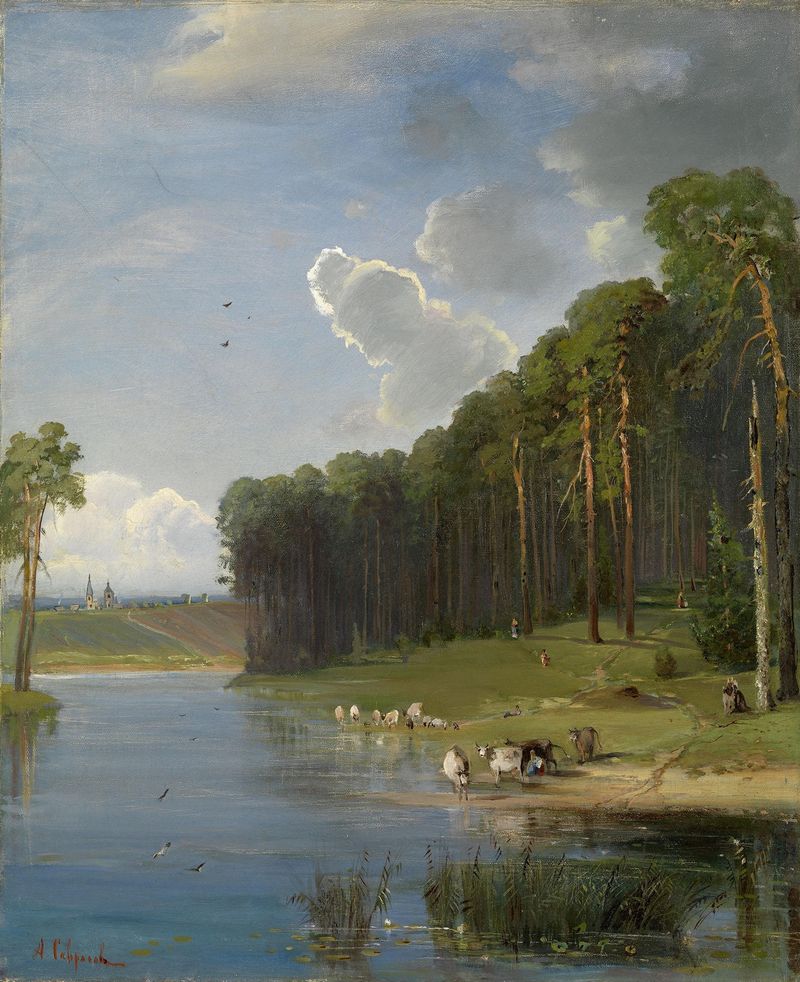
When did color learn to lie? The hues of a landscape can echo both the joyous and the mournful, revealing time’s elusive passage. Focus on the gentle curve of the river that meanders through the canvas, its surface a shimmering patchwork of blues and greens. Notice how the artist masterfully captures the soft, dappled light filtering through the trees, illuminating the banks with a delicate golden glow. The juxtaposition of warm and cool tones creates a sense of harmony, drawing the viewer into a tranquil yet complex moment suspended in nature. In the foreground, the rich, earthy browns of soil and foliage suggest fertility and life, while the distant mountains, shrouded in a cool mist, hint at the unknown.
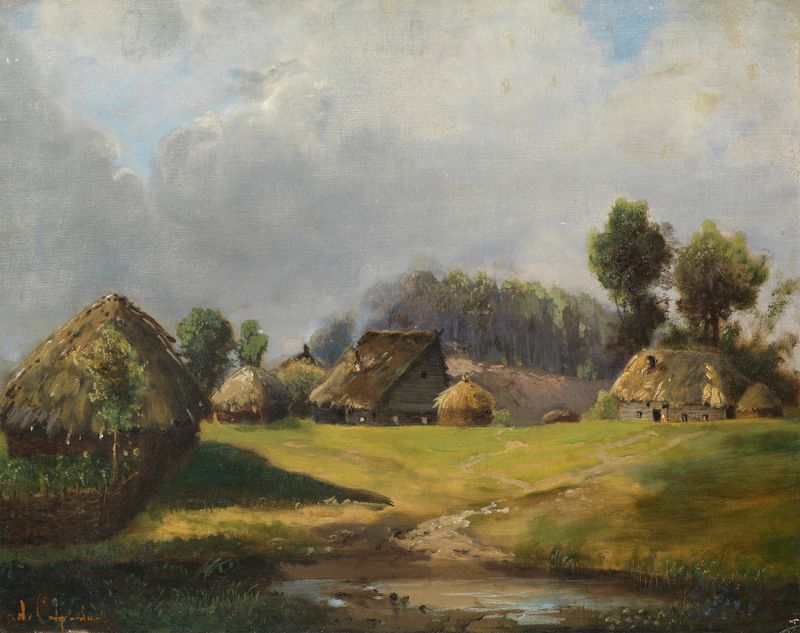
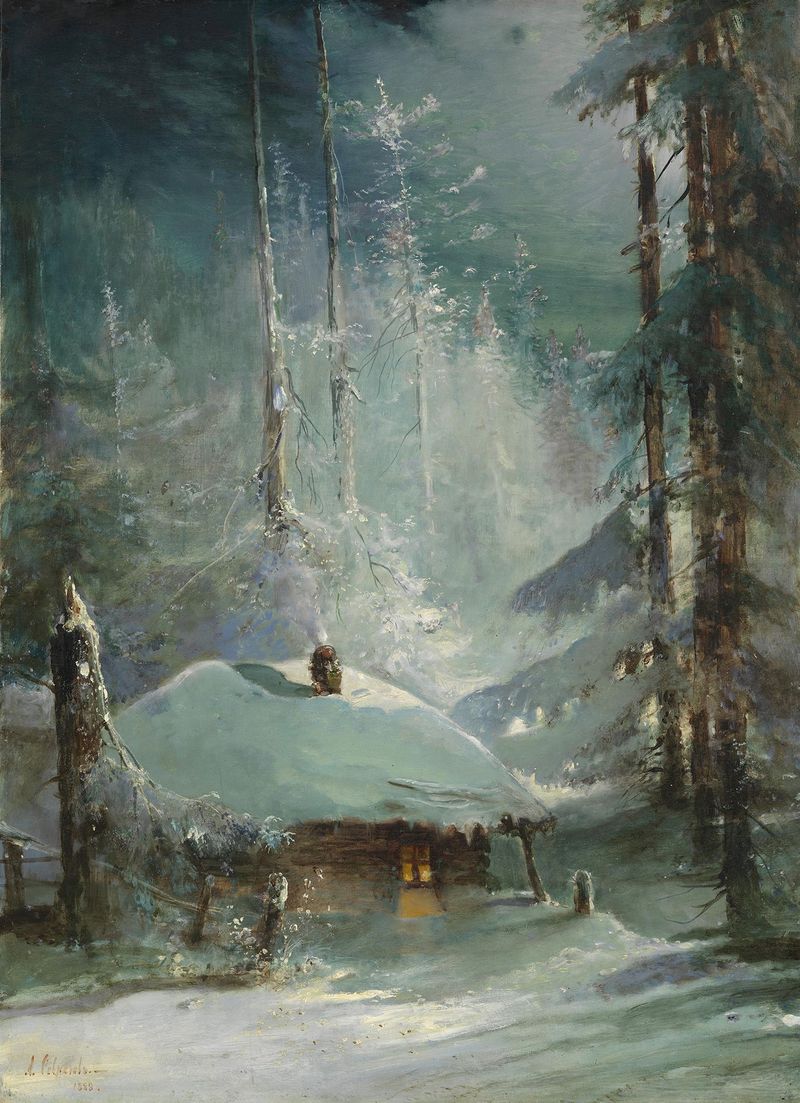
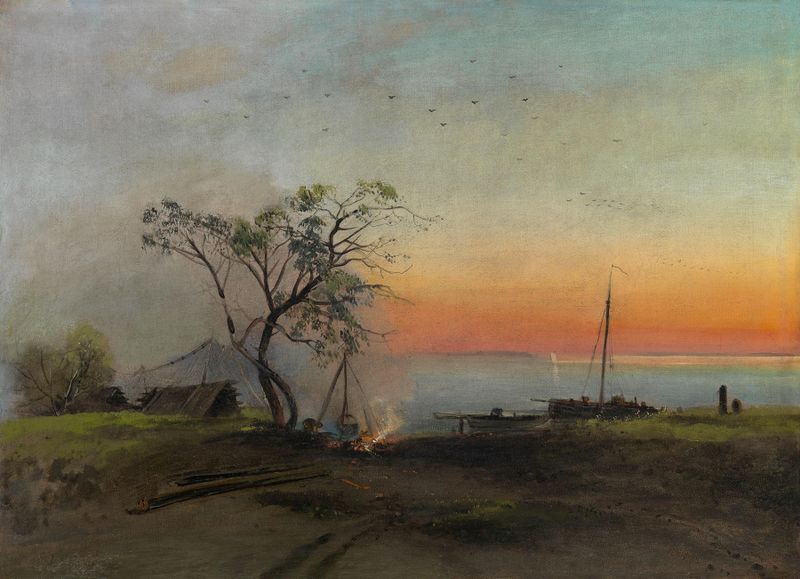
This contrast between the lively foreground and the serene, somewhat melancholic background evokes a tension between the present and the potential unfolding of time. The painting whispers of fleeting moments, urging contemplation on the passage of life, as the river flows ever onward, carrying memories with it. Savrasov painted this piece during the late 19th century, a pivotal time in Russian art as the movement toward realism was gaining momentum. Living in Moscow, he was influenced by the natural beauty surrounding him as well as the socio-political changes of the era.
His works often reflect a deep appreciation for the Russian landscape, marrying emotional depth with technical skill, which became a hallmark of his legacy.