Road To Marano With View On Cervara — History & Facts
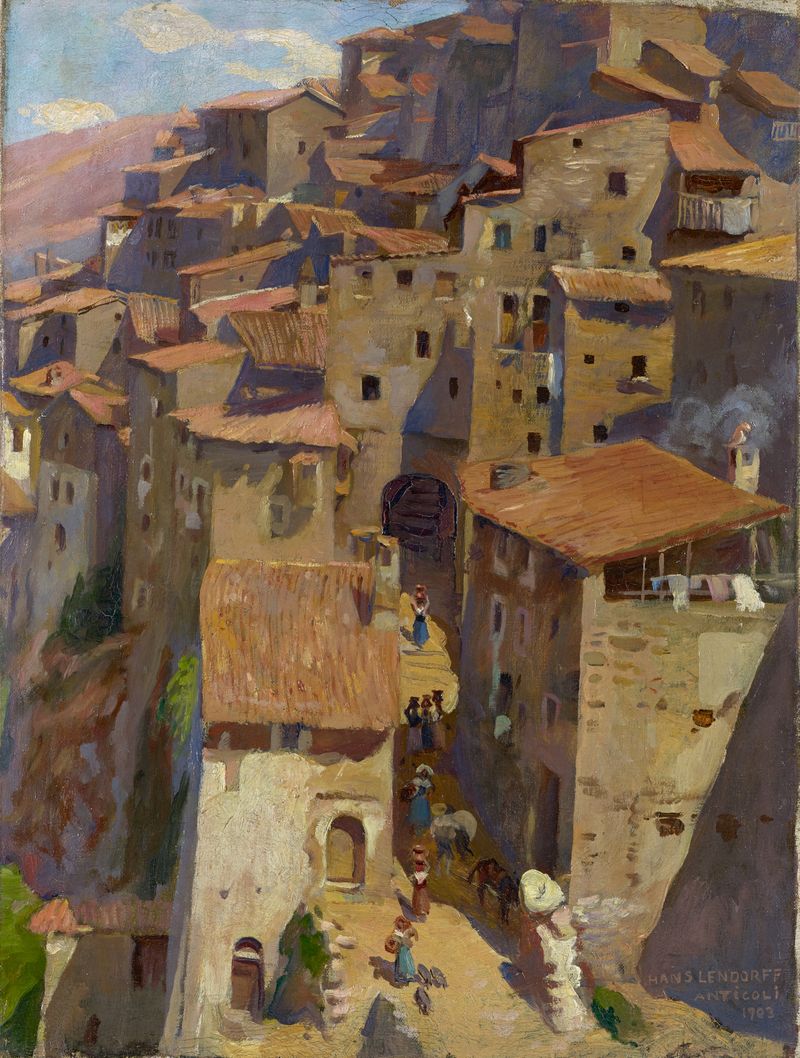
When did color learn to lie? In the stillness of the canvas, silence resonates, transforming the ordinary into the extraordinary. Look to the foreground, where a winding road snakes through a soft landscape, leading your gaze to distant hills. The colors blend seamlessly; muted greens and ochres evoke a serene harmony, while the soft, gentle strokes reflect the intimacy of an untouched scene. Notice how the interplay of light creates subtle shadows, adding depth to the composition, inviting you to journey along that very path. Yet, beneath this tranquil facade lies a tension between reality and tranquility.
The way the road beckons the viewer suggests a passage not just through space but through time, evoking a sense of nostalgia. The distant presence of Cervara looms like a memory, poised at the edge of the viewer's consciousness, hinting at stories yet untold. This juxtaposition between the silence of nature and the inherent movement of the road whispers of human longing and the ephemeral nature of existence. Lendorff created this work during an era marked by significant shifts in the art world, likely in the late 19th to early 20th century.
As Impressionism flourished, his landscapes reflected a departure from rigid techniques, embracing a softer, more emotive experience. It was a time when artists sought to capture the essence of a moment, often immersed in the serenity of their surroundings, allowing them to connect with the viewer on a deeper, more intimate level.