Rocher de Frêne near Profondeville — History & Facts
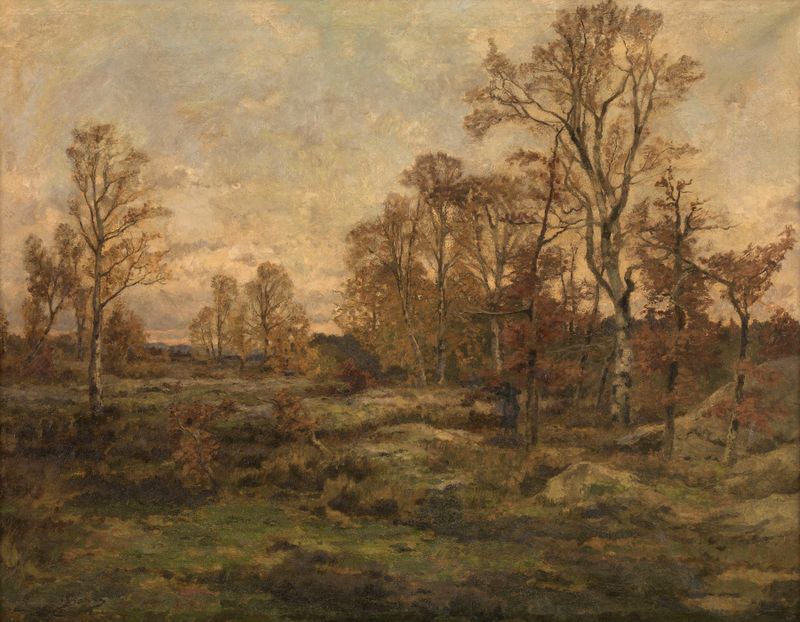
Where does light end, and longing begin? In the interplay of shadow and sun, the boundaries blur, revealing the depths of emotional turmoil hidden within nature's embrace. Look to the left at the towering, craggy rock formations, their jagged edges softened by a gentle illumination that hints at an impending twilight. The foreground, brushed with vibrant greens and soft browns, invites you to wander into a world both serene and unsettling. Notice how the light cascades down the cliffs, illuminating the leaves while casting long shadows that intertwine with the soil beneath.
This contrast between the bright foliage and the looming darkness creates a palpable tension, suggesting secrets held within the landscape. Delve deeper into the artwork, and you'll discover layers of significance. The craggy rocks symbolize resilience, standing steadfast amidst the encroaching darkness, while the tranquil river reflects a duality—calm yet capable of carrying whispers of betrayal. The juxtaposition of light and shadow parallels the fragility of trust, hinting at hidden narratives of conflict and emotional complexity that resonate within every brushstroke. Created in 1872, this piece emerged during a period of transformation for its creator, who was both influenced by the Romantic movement and navigating his artistic identity.
Baron painted this work in France, capturing the essence of a changing landscape while grappling with his personal experiences and the broader currents of an art world evolving toward Impressionism. At this juncture, nature served not only as a subject but as a mirror reflecting the tumult of human emotion.