Rock Creek, Winter — History & Facts
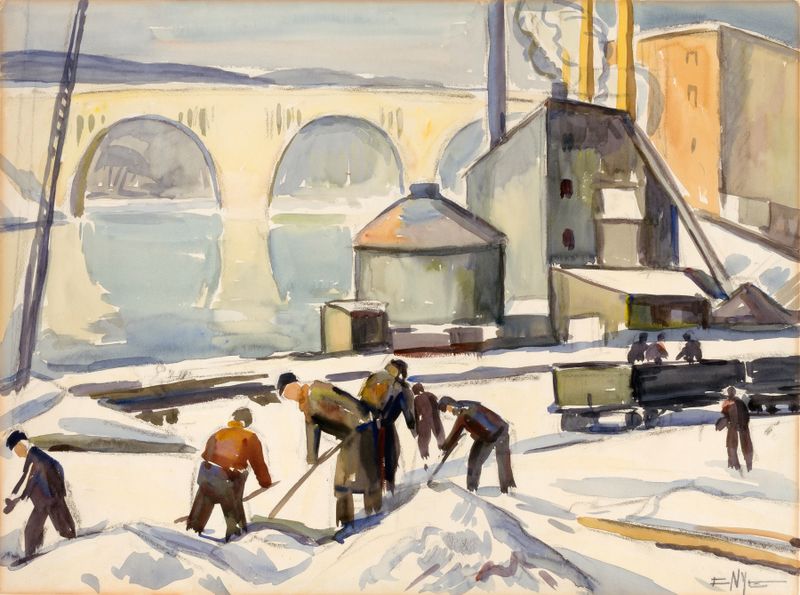
In the stillness of winter, nature’s hushed landscape speaks volumes, revealing the hidden violence lurking beneath an idyllic surface. Look to the foreground where the crystalline ice cloaks the river, each jagged shard shimmering with an unsettling beauty. The trees, stripped bare, rise like skeletal fingers against a cold, gray sky, their starkness amplified by the muted tones of the snow-covered ground. As your gaze travels, notice how the composition leads you deeper into the scene, creating an eerie sense of isolation that is both captivating and disquieting. Within this tranquil yet stark setting, a stark contrast emerges between the serene beauty of the snow and the underlying tension of the chilling environment.
The delicate interplay of light across the ice hints at a fragile existence, while shadows loom ominously, suggesting the harshness of a world where violence can be as quiet as the fallen snow. Each element in Rock Creek, Winter draws the viewer's attention to the unspoken truths of the winter landscape, where calmness is tinged with an air of foreboding. Edgar Nye painted this work between 1920 and 1929, a time when American art was grappling with new forms and subjects following World War I. Living in a period marked by social upheaval and artistic experimentation, he sought to capture not just the surface beauty of nature but also the underlying emotions and conflicts that define human experience, infusing his landscapes with a narrative depth that resonates even today.