Rocky Landscape — History & Facts
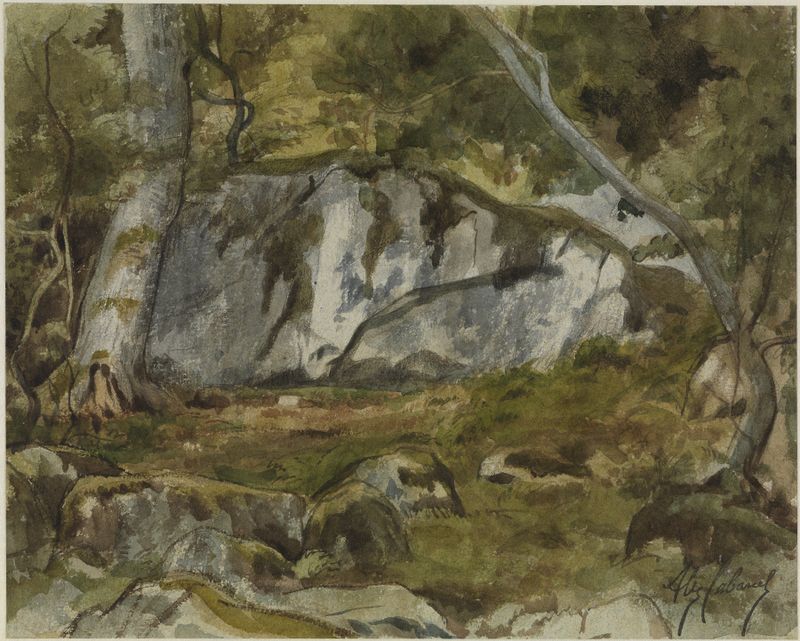
Did the painter know this moment would outlive them? In the sweeping expanse of Rocky Landscape, a profound silence descends, inviting viewers to contemplate the void that often lurks beneath the surface of beauty. It’s a space that suggests infinite potential, echoing both solitude and the relentless passage of time. Look to the left at the rugged outcrop, where the stark, jagged rocks rise dramatically against the soft hues of the sky. Notice how the light gently caresses the crags, casting deep shadows that contrast sharply with the warm tones of the setting sun.
The composition draws the eye across the undulating terrain, guiding us through the rich green valleys that beckon exploration. Cabanel's adept use of color creates a vibrant yet tranquil atmosphere, emphasizing the harmony between the harshness of nature and its serene beauty. In this landscape, the interplay of light and shadow evokes a sense of duality; what appears inviting may also embody isolation. The void of empty spaces between the rock formations offers contemplation, inviting viewers to reflect on their own experiences of solitude and introspection.
The careful detailing in the foliage hints at life thriving amid adversity, suggesting resilience within the stark environment. Each element, from the expansive sky to the textured earth, communicates an emotional tension woven into the fabric of the landscape. Alexandre Cabanel painted Rocky Landscape around 1850-60 during a period marked by the rise of realism in art. Living in France, he was influenced by the Romantic movement while also engaging with the emerging techniques of naturalism.
This painting reflects his mastery of capturing nature's raw beauty at a time when artists were increasingly exploring the relationship between humanity and the environment.