Roman Ruins — History & Facts
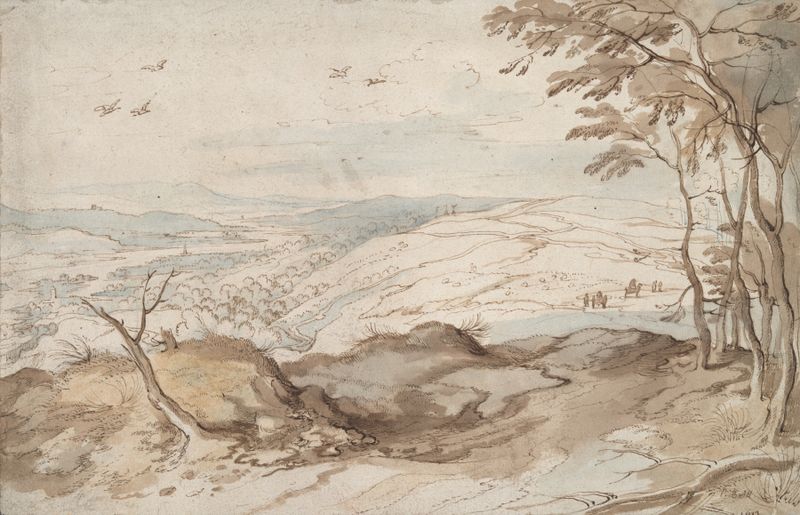
Who listens when art speaks of silence? In the stillness of a decaying world, whispers of legacy linger between the shadows of what once was. Look to the right at the towering remnants of crumbled columns, their strength now a mere suggestion against the backdrop of a muted sky. The palette brims with earth tones—ochres and greys—infusing the scene with a sense of somber history. Notice how the intricate textures of stone contrast with the delicate brushwork of the distant landscapes, guiding the viewer’s gaze from ruin to horizon, evoking an emotional connection to the passage of time. Within this composition lies a profound exploration of transience and memory.
The juxtaposition of the ancient ruins against the vibrant greenery hints at nature's resilience and the inexorable march of time. Each fragment of stone is steeped in echoes of civilization, inviting contemplation on the impermanence of human achievement. The work subtly probes the tension between decay and renewal, suggesting that while structures may fall, their stories remain etched in the earth. Created in the early to mid-17th century by a collective influenced by the masterful Pieter Brueghel the Elder, this piece reflects the artistic transition towards the Baroque era, emphasizing realism and emotional depth.
The artists, working in Northern Europe, were exploring themes of everyday life and nature, responding to the sociopolitical landscapes of their time. In a period marked by upheaval and change, this painting stands as a testament to both the fragility of human endeavor and the enduring power of memory.