
Roman ruins with characters — History & Facts
This delicate balance invites us to explore the depths of fragility and permanence within the ruins of time. As we stand before the canvas, we are beckoned to consider how history intertwines with the human experience, echoing through the passage of the ages. Look to the left where the majestic arches of the crumbling structure rise, hinting at their former glory. The interplay of light and shadow creates a dynamic tension, drawing attention to the figures that populate this space.
Pannini's deft brushwork captures the textures of weathered stone, while soft pastel hues breathe life into the scene. Subtle nuances in color speak to both nostalgia and decay, inviting viewers to linger in the stillness of this moment. Within the chaos of scattered figures, we sense a dialogue between the past and present. Each character, engaged in their pursuits, embodies the fleeting nature of existence, juxtaposed against the steadfast ruins that surround them.
The contrasting vibrancy of life against the muted tones of history emphasizes the transitory nature of human experience, evoking a poignant reflection on what remains after we have gone. Giovanni Paolo Pannini painted this work during the height of the 18th century, a time when the fascination with the classical world surged among artists and intellectuals. Working within the vibrant atmosphere of Rome, Pannini sought to chronicle the allure of antiquity while simultaneously engaging with the currents of contemporary culture. His mastery in blending architecture and human figures reflects a pivotal moment in art history, one that bridges the classical ideals with the realities of modern life.
More Artworks by Giovanni Paolo Pannini
Browse all →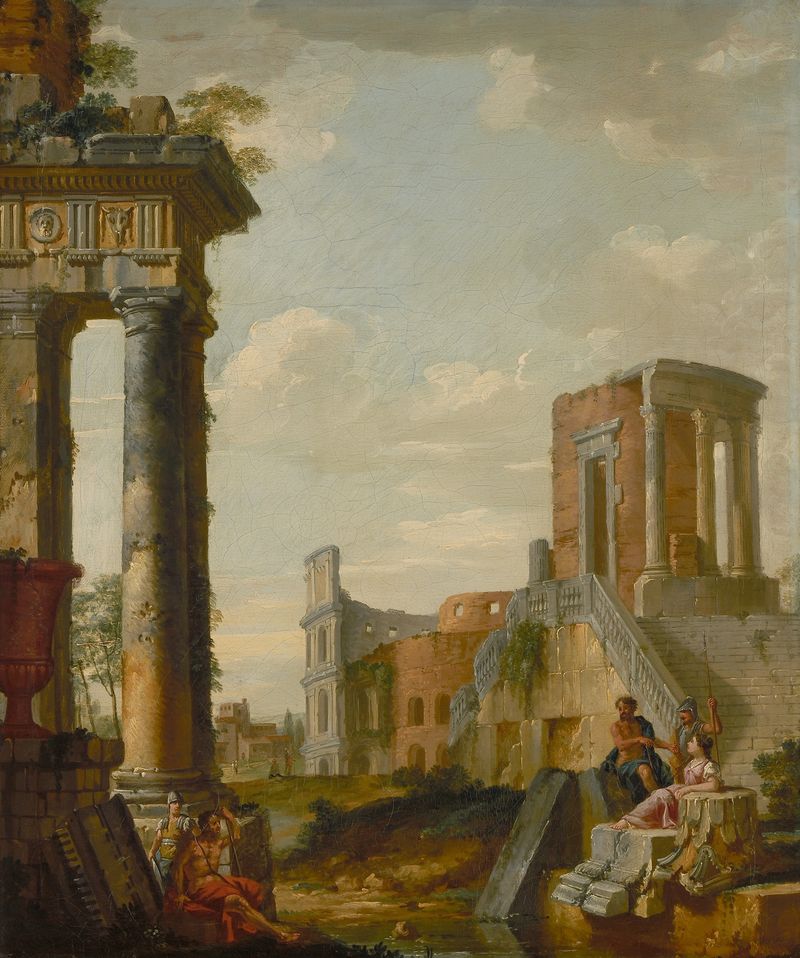
More Architecture Art
Browse all →
The statue of Liberty
Frédéric Auguste Bartholdi

View of Houses in Delft, Known as ‘The Little Street’
Johannes Vermeer

View of Houses in Delft, Known as ‘The Little Street’
Johannes Vermeer

The Cathedral in Rouen. The portal, Grey Weather
Claude Monet

The yellow house
Vincent van Gogh

The Church in Auvers-sur-Oise, View from the Chevet
Vincent van Gogh