Romantic landscape with architecture — History & Facts
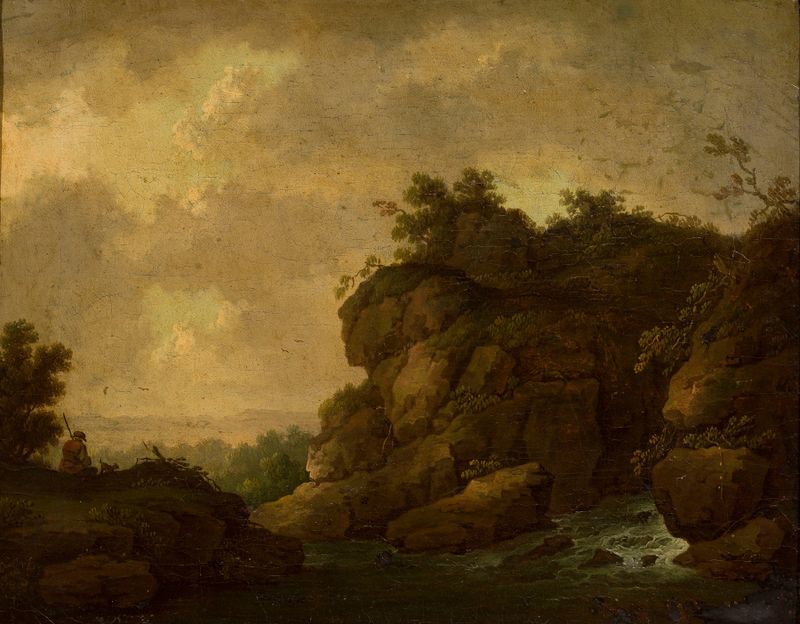
Is this a mirror — or a memory? The tranquil expanse of a romantic landscape beckons us into its serene embrace, inviting introspection amidst the whispers of nature and architecture. Look to the foreground where soft greens intertwine with gentle earth tones, framing a pathway that meanders towards the horizon. Notice how the light dances across the surfaces, illuminating the delicate details of both the foliage and the ornate buildings that rise against the backdrop. The subtle blending of color creates a harmonious balance, as if time itself flows seamlessly through the landscape, inviting the viewer to wander along its winding trails. Within this picturesque scene lies a profound tension between the natural and the man-made.
The architecture, though meticulously crafted, appears almost ephemeral against the boundless sky, suggesting a fleeting existence in the grand tapestry of nature. The reflective surfaces, whether in water pools or the architecture's surfaces, evoke a sense of nostalgia, prompting questions about our place in this serene yet transient world. Johann Christoph von Bemmel painted this landscape during an era marked by the transition from Baroque to Romanticism, likely in the late 18th century or early 19th century. At this time, the artist was grappling with the ideals of beauty and nature, seeking to capture the emotional resonance of landscapes that spoke to the human experience.
The period witnessed a burgeoning appreciation for the sublime in nature, setting the stage for works that would celebrate both serenity and introspective reflection.