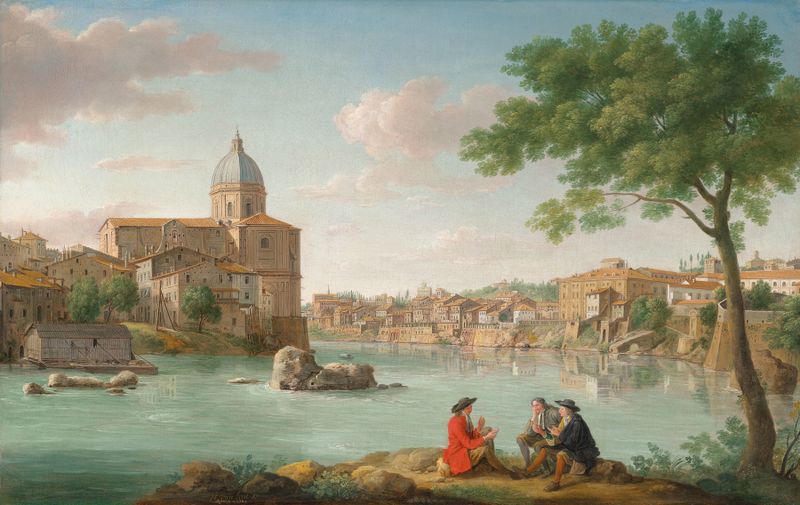
Rome, a view from a garden looking south towards San Giovanni in Laterano, seen from behind — History & Facts
The sun hangs low in the sky, casting a golden hue over the lush garden. A gentle breeze rustles the leaves, and the distant silhouette of San Giovanni in Laterano rises majestically in the background, a sentinel of history. Figures stroll leisurely through this serene space, their voices a soft murmur in the warm afternoon air, creating a moment of tranquil respite amid the throes of the city's pulse. Look to the left where a vibrant array of flowers spills forth, their colors alive and vivid against the rich greens of the garden foliage.
The delicate brushwork captures the play of light and shadow, drawing the eye toward the architectural grandeur of the basilica framed in the distance. Notice how the composition cleverly positions the viewer, as if inviting them to step into this serene enclave, making the viewer a part of the scene itself. Beneath the tranquil surface lies a tension between nature and the looming presence of the towering church, which seems to echo whispers of revolution and change. The lush garden represents paradise, a fleeting moment of beauty amidst the turmoil of urban life, while the church stands as a reminder of tradition and authority.
This juxtaposition may evoke reflections on the shifting tides of power and the inner conflicts faced by society, hinting that beneath calm exteriors lie deeper narratives. Van Lint painted this work during a time when the artistic landscape of Europe was shifting, with emerging movements questioning established norms. The exact date is not recorded, but his art was influenced by the Baroque and Rococo styles, indicative of his surroundings in 18th-century Italy. The world was on the brink of moments that would redefine not only art but society itself, echoing through the brushstrokes of every picturesque scene he immortalized.