Rome, A View of Villa Torlonia — History & Facts
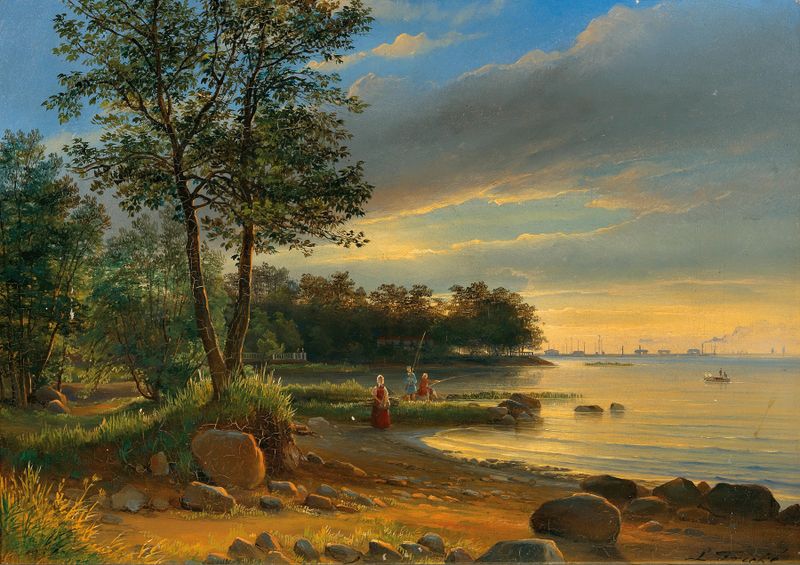
It is through the stillness of a landscape that we uncover the stories of what lies beneath the surface, waiting to be reflected upon. Look closely at the interplay of greens and blues that dominate the canvas, drawing you into the lush landscape surrounding Villa Torlonia. Notice how the soft brush strokes create a whisper of light on the leaves, while the tranquil water reflects the serene sky above. The composition invites your gaze across the scene, leading you from the charming architecture nestled among the trees to the distant horizon, where nature and civilization harmoniously coexist. Beneath the tranquil beauty lies a deeper commentary on the passage of time.
The villa, representing both history and elegance, is juxtaposed against the vibrancy of the surrounding flora, perhaps hinting at the inevitable decay that time brings. Each element in the painting holds significance; the meticulous detailing of the architecture contrasts with the wildness of nature, suggesting a fragile balance between human creation and the relentless forces of the natural world. The reflections in the water evoke a sense of introspection, encouraging viewers to ponder their own relationship with the past. Created during an era when Romanticism was flourishing, Longin Christianowitsch Fricke painted this piece amidst the evolving landscape of 19th-century art in Europe.
Living and working in a time of heightened sensitivity to nature, Fricke sought to capture not just the physical beauty of his surroundings in Rome, but also the emotional resonance it held for the viewer. This work stands as a testament to his mastery in blending the realms of reality and reflection.