Rome, From The Trinita Di Monti — History & Facts
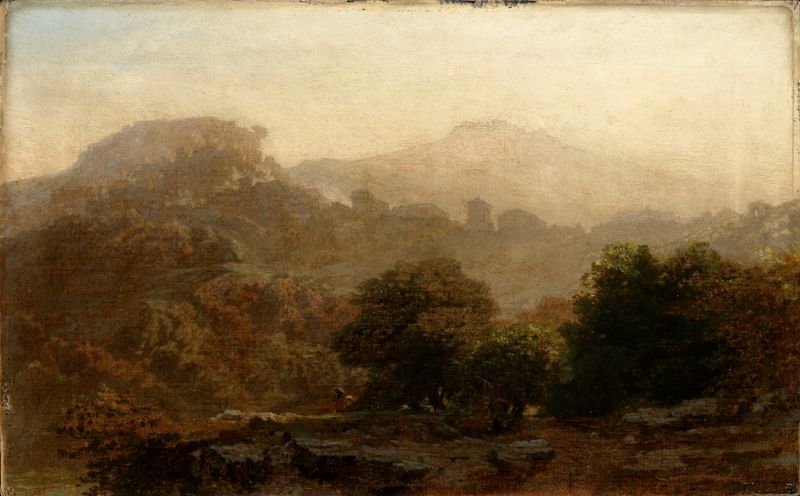
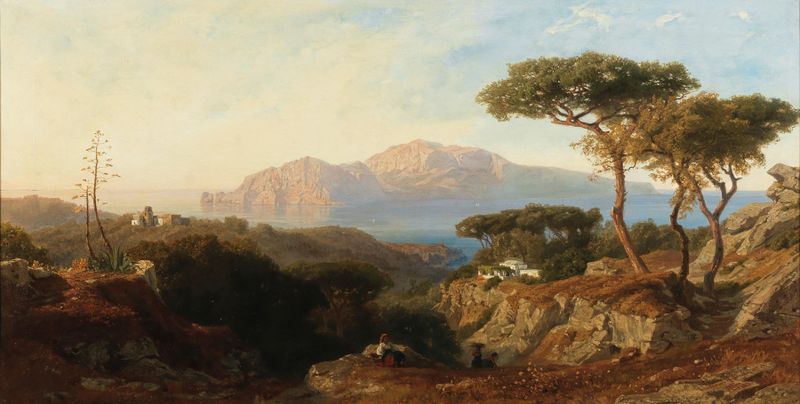
Could a single brushstroke hold eternity? In Rome, From The Trinita Di Monti, the canvas captures the city with a yearning that transcends time, a testament to unfulfilled longing woven into the fabric of its landscape. Look to the foreground where the delicate, leafy trees frame the vibrant expanse of Rome, inviting your gaze into the bustling life below. Notice how the warm, golden light bathes the ancient architecture, punctuating the shadows with hints of ochre and soft cerulean. The composition leads your eye through layers of depth, revealing a harmonious blend of buildings and sky that reflect the artist's masterful use of color and texture, merging the natural with the man-made. Yet, within this idealized panorama lies an undercurrent of tension.
The distant hills, shrouded in mist, symbolize the elusive nature of desire—an unreachable paradise that beckons from afar. The playful dance of light against the rough stone structures suggests both warmth and isolation, a duality that speaks to the complex relationship between human aspiration and the permanence of nature. Each brushstroke carries a palpable sense of longing for connection, both spatial and emotional. In 1871, Lindemann-Frommel created this work while living in Rome, a period marked by the city's reawakening as Italy's capital.
As artists flocked to capture the city’s allure, he sought to express an intimate vision, one that mirrored his own desires against the backdrop of a rapidly changing world. This painting stands as a poignant reflection of that historical moment—a dialogue between the individual and the timeless city.